

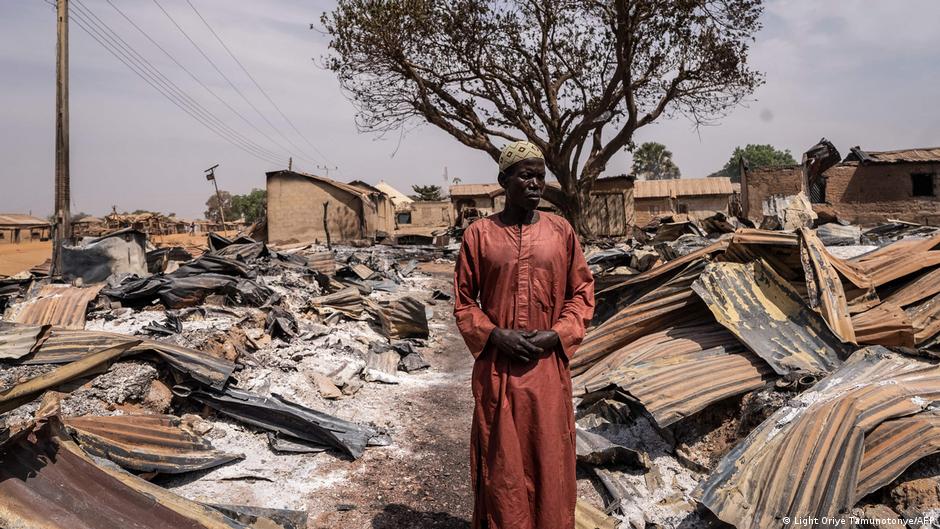
Photo: DW (English)
The Grim Reality of Rural Nigeria's Security Crisis
Walahi, another day, another tragedy. As dawn broke yesterday, three Nigerian villages became crime scenes, with at least 30 innocent lives snuffed out by gunmen who attacked with the kind of precision that shows this wasn't their first rodeo. Several more people are missing, and honestly, we all know what that usually means in these situations.
This latest attack is just another entry in Nigeria's growing ledger of rural massacres. But make no mistake - this isn't just statistics we're talking about. These are fathers who won't return home from their farms, mothers who died protecting their children, and entire families wiped out while they slept.
The Pattern is Clear, the Response is Not
Omo, if you've been following these attacks, you'll notice a disturbing pattern. Rural communities, isolated from major cities, attacked at dawn when people are most vulnerable. The attackers come with sophisticated weapons, carry out their deadly mission, and disappear into the bush before help arrives.
What's particularly frustrating is how predictable this has become. Every few weeks, we read headlines about "unknown gunmen" attacking villages. But are they really unknown? These coordinated attacks suggest planning, local knowledge, and resources that don't just appear from thin air.
The victims are always the same - ordinary Nigerians trying to make an honest living from farming, trading, or small businesses. People who have never hurt a fly, yet they pay the ultimate price for failures in our security architecture.
Where Are Our Security Agencies?
This is where we need to ask the hard questions. Nigeria spends billions on security annually, yet rural communities remain sitting ducks. The Nigeria Police Force, Nigerian Army, and other agencies have presence in urban areas, but what about these remote villages?
The truth is that our security strategy is heavily skewed towards protecting government installations, VIPs, and urban centers. Meanwhile, the people who feed the nation - our farmers and rural dwellers - are left to fend for themselves against heavily armed criminals.
It's not just about manpower either. Intelligence gathering in rural areas is practically non-existent. How do large groups of armed men move around without detection? How do they plan attacks without being noticed? These are intelligence failures that cost lives.
The Economic Cost of Insecurity
Beyond the immediate human tragedy, these attacks are devastating Nigeria's agricultural sector. Farmers are abandoning their lands, food production is declining, and food prices are skyrocketing. When you can't guarantee a farmer's safety, don't expect him to risk his life cultivating crops.
States like Benue, Plateau, Kaduna, and others have seen massive displacement of farming communities. The ripple effect reaches every Nigerian's dining table through increased food costs and scarcity.
This is economic warfare, whether intentional or not. When food production collapses, the entire nation suffers. Yet we seem to be sleepwalking through this crisis.
What Government Must Do Now
First, President Bola Tinubu needs to declare rural security a national emergency. Not just in words, but with concrete actions and budget allocations. Rural communities deserve the same level of protection as Abuja and Lagos.
Second, we need massive investment in rural policing infrastructure. Mobile police units, communication systems, and rapid response capabilities must be extended to every local government area. If criminals can reach these villages, so can our security forces.
Third, intelligence gathering must be revolutionized. Local vigilante groups, hunters' associations, and community leaders should be integrated into formal intelligence networks. They know their terrain and can spot unusual activities.
Fourth, state governors must stop playing politics with security. Whether it's farmers-herders clashes, banditry, or terrorism, the response must be coordinated across state boundaries. Criminals don't respect state borders.
Citizens Must Also Act
While we demand action from government, we citizens cannot be passive. Rural communities need early warning systems - simple mobile phone networks that can quickly alert authorities to suspicious movements.
Urban Nigerians must also pressure government through advocacy, protests, and voting patterns. As long as rural killings remain "distant news," politicians won't prioritize solutions.
Religious and traditional leaders must speak up consistently. Your voices carry weight in communities - use them to demand accountability from elected officials.
The Time for Action is Now
Every day we delay decisive action, more innocent Nigerians die. These latest killings should be a wake-up call that business-as-usual isn't working. We need a complete overhaul of our rural security strategy.
The families of those 30 victims deserve justice. The missing persons deserve rescue efforts. And the millions of vulnerable rural Nigerians deserve protection. Anything less is a failure of the most basic duty of government - protecting citizens' lives.
We cannot continue to mourn today and forget tomorrow. This cycle of violence must end, and it starts with treating rural security as the national priority it truly is.
Comments
Post a Comment