

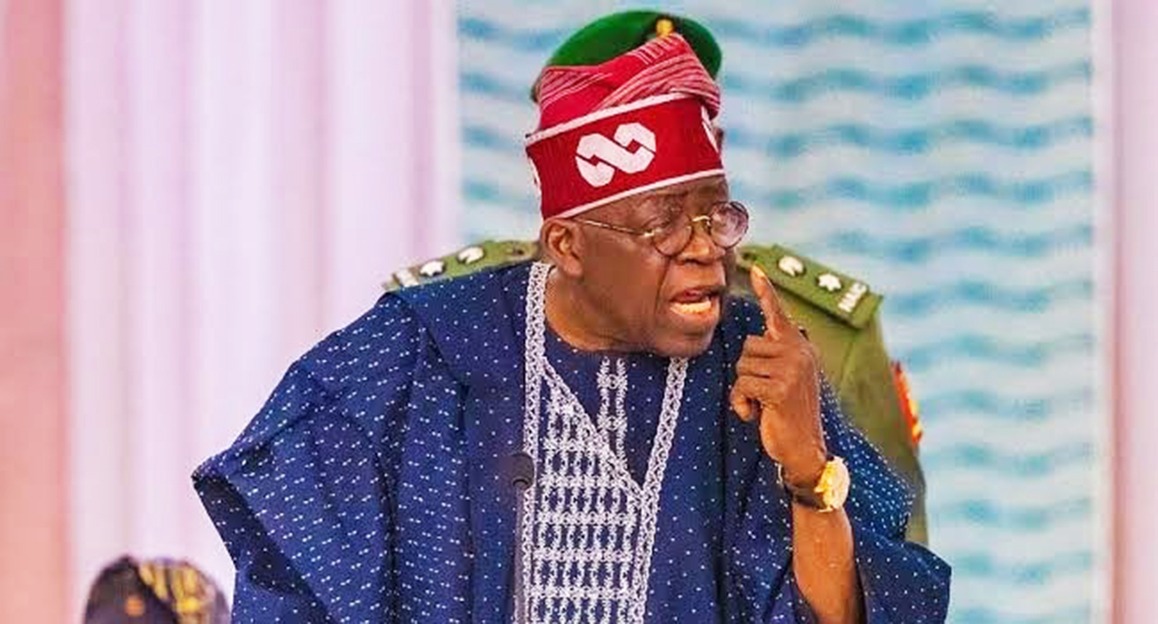
Photo: Thechronicle.com.gh
My people, when a seasoned politician like Chief Eze Chukwuemeka Eze of the African Democratic Congress (ADC) compares President Bola Ahmed Tinubu to Paul Biya, we need to sit up and pay attention. This comparison no be small talk o – we're talking about Africa's longest-serving president who has ruled Cameroon with iron fist since 1982.
Who is Paul Biya and Why Should Nigerians Care?
Before we dive into Chief Eze's concerns, make we understand who this Paul Biya is. At 91 years old, Biya has been Cameroon's president for over four decades. He's the poster child for everything wrong with African leadership – election rigging, suppression of opposition, economic mismanagement, and turning the presidency into a personal kingdom.
Biya rarely stays in Cameroon, preferring luxury hotels in Switzerland. His citizens suffer while he jets around the world. Youth unemployment is through the roof, and anyone who speaks against his government faces serious wahala. This is the man Chief Eze is comparing our president to – and that should make every Nigerian think twice.
What Exactly Did Chief Eze Say?
According to the ADC chieftain, President Tinubu seems more interested in consolidating power than solving Nigeria's problems. He expressed disappointment that after all the sacrifices made to bring this administration to power, the country is being taken down what he called 'this inglorious path.'
Chief Eze's concern isn't just political rhetoric – it's a warning bell. When opposition figures start drawing parallels between a Nigerian president and Africa's most entrenched dictator, we need to ask ourselves: what patterns are they seeing that worry them?
Signs That Should Make Nigerians Concerned
Let's be honest, some recent developments fit too perfectly into the Biya playbook:
- Handling of dissent: The way protesters and critics have been treated recently echoes authoritarian tendencies we've seen elsewhere in Africa
- Economic policies: Despite suffering masses, policies seem to favor a select few – classic dictator move
- Democratic institutions: Questions about the independence of key institutions like INEC and the judiciary are growing louder
- Media relations: Increasing pressure on journalists and media houses that dare to criticize government policies
The Nigerian Democracy at a Crossroads
Nigeria's democracy, though young, has survived military coups and civilian transitions. But comparing any Nigerian leader to Paul Biya is like saying we're heading toward the path of no return. Cameroon today is what happens when democratic institutions are weakened systematically over decades.
The truth is, many African countries that started their democratic journey around the same time as Nigeria have backslidden into authoritarian rule. Rwanda's Paul Kagame, Uganda's Yoweri Museveni, and of course, Cameroon's Paul Biya – all these leaders came to power promising change but ended up becoming the very problems they claimed to solve.
What This Means for Ordinary Nigerians
If Chief Eze's fears materialize, ordinary Nigerians will suffer the most. Look at Cameroon today – despite being rich in oil and other natural resources, majority of citizens live in poverty while Biya and his cronies live like kings.
The Anglophone crisis in Cameroon, where government forces have killed thousands of civilians, shows what happens when leaders become too comfortable in power and stop listening to their people. We don't want that kind of wahala for Nigeria.
The Opposition's Role and Responsibility
Chief Eze's statement highlights the important role of opposition voices in any democracy. When ADC, PDP, Labour Party, and other opposition parties raise these concerns, they're not just playing politics – they're serving as democracy's watchdogs.
However, the opposition must also present credible alternatives. It's not enough to criticize; they must show Nigerians what they would do differently. Empty rhetoric won't cut it when people are suffering.
Can Nigeria Avoid the Biya Trap?
The good news is that Nigeria's democracy is more robust than Cameroon's was in the 1980s. We have stronger civil society, more vibrant media, and citizens who are increasingly politically aware. Social media has also made it harder for leaders to completely control information flow.
But we cannot be complacent. Democracy dies slowly, then suddenly. It starts with little compromises, small erosions of institutional independence, and gradual suppression of dissent.
President Tinubu still has time to prove Chief Eze wrong. He can choose to be the democrat who fixes Nigeria's problems rather than the strongman who perpetuates them. The choice is his, but the consequences will be ours.
As we watch these developments unfold, let's remember that democracy is not a spectator sport. Every Nigerian has a role to play in ensuring our country doesn't follow the path of Cameroon. Chief Eze has sounded the alarm – will we listen?
Comments
Post a Comment