

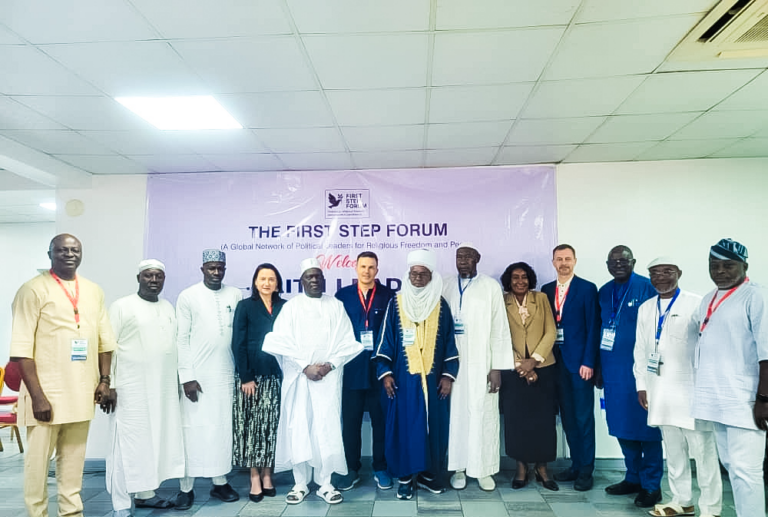
Photo: Christiantoday.com
When Faith Leaders Say 'Enough Is Enough'
Wahala don too much for this country, and our religious leaders are finally saying what we've all been thinking - that this violence between Christians and Muslims has to stop. Na the same God we all dey serve, abi?
Nigeria has earned the unfortunate title of being the world's deadliest place for Christians, according to Open Doors World Watch List. But instead of pointing fingers and trading blames, some of our faith leaders are rolling up their sleeves to find real solutions. E be like say wisdom don finally catch some people.
The Concrete Steps Our Leaders Are Taking
Pastor Samson Ayokunle of the Christian Association of Nigeria (CAN) and Sheikh Balarabe Dawud of the Supreme Council for Islamic Affairs recently sat down together - not for photo ops, but for serious business. Their joint declaration included five specific actions:
- Community Peace Ambassadors: Training young Christians and Muslims together to become peace mediators in their communities. These ambassadors will undergo six-month programs to understand both faiths better.
- Joint Economic Projects: Establishing interfaith cooperative societies where Christians and Muslims can do business together. Money, as we all know, has a way of bringing people together.
- Shared Security Intelligence: Creating communication networks between church and mosque leaders to share information about potential threats. When wahala wan start, both sides go know on time.
- Youth Exchange Programs: Sending Christian youth to spend weekends in Muslim communities and vice versa. Nothing breaks down barriers like sharing amala and pounded yam together.
- Joint Disaster Response Teams: When floods or other disasters strike, interfaith teams will respond together, showing that compassion has no religious boundaries.
Success Stories That Give Us Hope
In Kaduna State, where religious tensions have historically run high, the Kaduna Peace Commission has facilitated over 200 interfaith dialogues since 2019. The commission, led by Archbishop Matthew Ndagoso and Imam Abubakar Gumi-Zaria, has successfully prevented three potential conflicts through early intervention.
Down in Jos, Plateau State, the Museum of Traditional Nigerian Architecture has become an unexpected symbol of unity. Built through joint Christian-Muslim funding, it employs equal numbers from both faiths and has hosted over 50 interfaith cultural events. The project coordinator, Mrs. Fatima Ibrahim, noted that 'when people work together to build something beautiful, they forget their differences.'
In Kano State, the Interfaith Mediation Centre has recorded a 40% reduction in religious conflicts in communities where they operate. Their secret? They focus on solving everyday problems - water shortages, market disputes, land issues - rather than theological debates. Smart approach, if you ask me.
The Business of Peace
One initiative that's catching fire is the 'Faith and Fortune' program in Lagos. Christian and Muslim entrepreneurs are forming joint ventures, and the results are speaking for themselves. Alhaji Musa Abdullahi and Pastor John Okafor started a joint transport business that now employs 150 people from both religions.
'When your Muslim brother is helping you make money, you no go fit dey see am as enemy,' Pastor Okafor explained during our interview. Their success has inspired 23 similar joint ventures across Lagos State.
The Technology Solution
Young Nigerians are also bringing tech into the peace equation. The 'OneNaija' mobile app, developed by a team of Christian and Muslim tech enthusiasts, allows users to report religious tensions before they escalate. Local faith leaders receive alerts and can intervene early.
The app has already helped resolve 89 disputes across six states. As one of the developers, Aisha Mohammed, put it: 'Technology no get religion. If we fit use am to order food, we fit use am to order peace.'
Challenges Still Dey Ground
Make we no lie to ourselves - the journey still get plenty potholes. Some religious extremists on both sides still dey preach hatred. Politicians wey dey use religion to divide us for their own gain never change. And poverty - that one na the biggest enemy of peace.
But the efforts of these faith leaders show that change is possible. When Imam Abdullah Abubakar risked his life to hide 262 Christians during attacks in Barkin Ladi, or when Pastor Yohanna Buru led his congregation to rebuild a destroyed mosque in Yelwa, they showed us the Nigeria we can become.
Wetin We Fit Do
As ordinary Nigerians, we fit support these peace efforts by:
- Attending interfaith events in our communities
- Refusing to spread religious hate speech on social media
- Supporting businesses owned by people from other faiths
- Teaching our children that we are Nigerians first, before any religious identity
The truth be say, whether na church bell or mosque call to prayer wey dey wake you up for morning, na the same Nigerian sun dey shine on all of us. Our faith leaders don show us the way - now na we the people get to walk am.
Comments
Post a Comment