


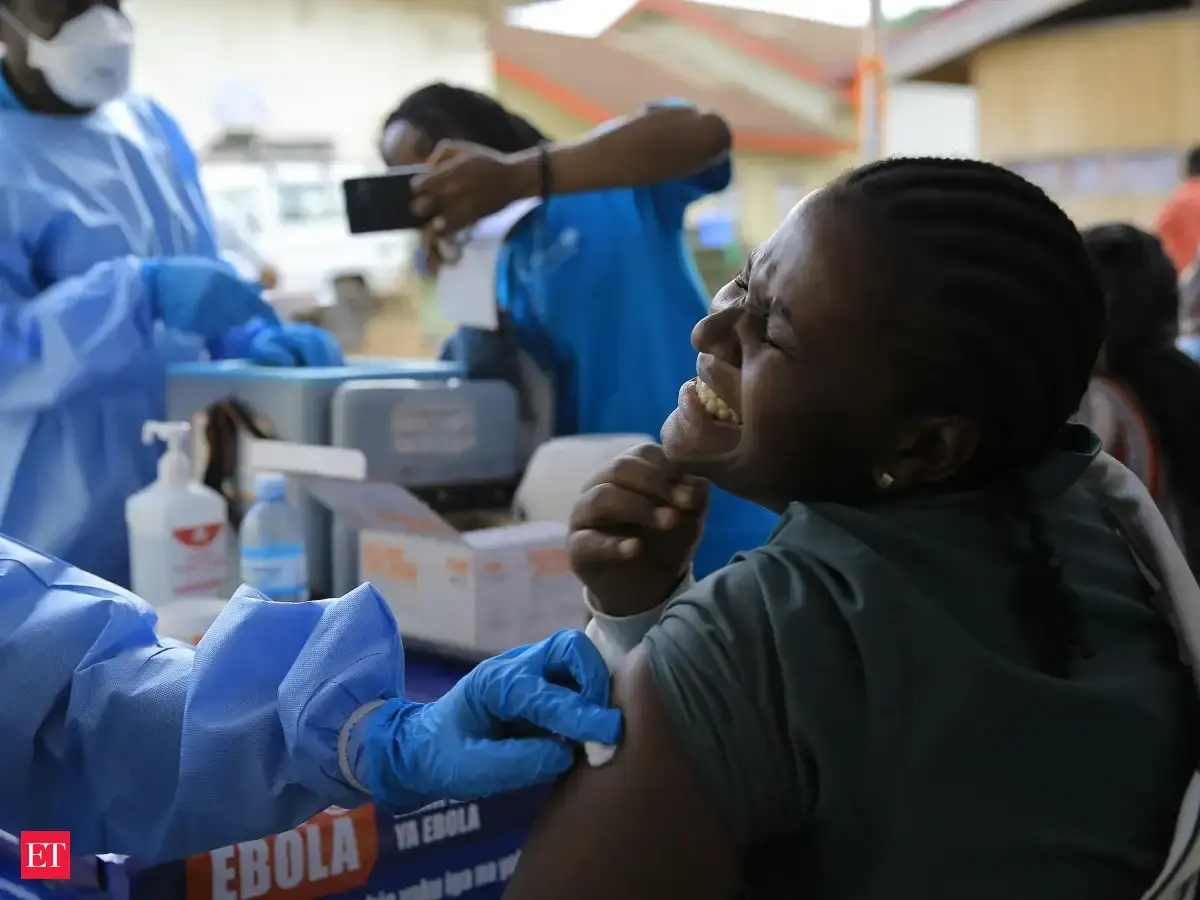
Photo: The Times of India
E Don Happen — Ebola Is Here and Nigerians Need to Wake Up
Chai! Just when we thought 2025 was going to give us small breather from health wahala, news broke that Ebola has confirmed a case right here in Nigeria. This is not the time to form 'it can't happen to me' — that mentality is exactly how viruses like this one spread like wildfire. Let us break down everything you need to know, from how this thing entered our country to what you personally need to do to protect yourself and your family.
How Did Ebola Get Into Nigeria? The Full Gist
Here is what we know so far: The current Ebola outbreak originally started in the Democratic Republic of Congo (DRC) — our sister country in Central Africa. From there, the virus has moved like a bad rumour, spreading to at least four other countries including Uganda, Kenya, and now Nigeria.
The confirmed Nigerian case involves a woman who arrived in Nigeria from Uganda, which had already been dealing with its own Ebola cases linked back to Congo. Health authorities say contact tracing is currently ongoing — meaning they are hunting down every single person this woman may have come in contact with since she arrived. This is critical work, and we need to let them do it without interference or panic spreading more harm than the virus itself.
To put this in context, Uganda had reported an outbreak after Congo cases crossed its borders. Kenya has also raised alarms. The virus is moving through travel routes and human contact, which is why Nigeria — with one of Africa's busiest airports and borders — was always considered a high-risk destination once neighbouring countries were affected.
What Exactly Is Ebola and Why Should You Fear It?
For those who may have forgotten since the 2014-2016 West Africa outbreak that killed over 11,000 people across the region, let us do a quick refresher. Ebola Virus Disease (EVD) is a severe and often fatal illness caused by the Ebola virus. The mortality rate, depending on the strain and how quickly treatment begins, can be anywhere from 25% to 90%. Yes, you read that correctly — up to 90%.
Symptoms to watch out for include sudden fever, severe headache, muscle pain, weakness, fatigue, diarrhoea, vomiting, abdominal pain, and unexplained bleeding or bruising. The tricky part is that initial symptoms look like ordinary malaria or typhoid fever — the kind of thing many Nigerians brush off and treat at home with self-medication. That attitude must stop immediately.
Ebola spreads through direct contact with the blood, secretions, organs, or other body fluids of infected people. It is NOT airborne like COVID-19, but it is extremely dangerous if you touch an infected person without proper protection.
The Nigerian Government's Response — Are They On Top of This?
The Nigeria Centre for Disease Control and Prevention (NCDC) has activated its Emergency Operations Centre and is working with the World Health Organization (WHO) and state health authorities. Port health surveillance has reportedly been heightened at international airports and land borders. Contact tracing teams have been deployed, and isolation facilities are being prepared.
However, if Nigeria's response to COVID-19 taught us anything, it is that we cannot afford to rely solely on government action. Remember how slow things moved in the early days of COVID before ordinary Nigerians started taking personal responsibility? We cannot afford to make that same mistake with Ebola, which moves faster and kills harder.
Health Minister Professor Muhammad Ali Pate has urged Nigerians to remain calm but vigilant — and that is actually good advice. Panic helps nobody, but complacency is equally deadly.
What Every Nigerian Must Do Right Now to Stay Safe
Okay, this is the part that matters most. Let us be very practical and direct:
- Avoid contact with anyone showing Ebola symptoms: If someone around you has sudden fever, unexplained bleeding, severe vomiting, or weakness — especially if they have recently travelled from Congo, Uganda, or Kenya — keep your distance and call the NCDC hotline immediately: 0800-970000-10.
- Stop touching dead bodies without protection: This is hard to say but needs to be said. Traditional burial practices that involve washing and touching the deceased are extremely high-risk during Ebola outbreaks. Infected bodies remain contagious even after death.
- Wash your hands like your life depends on it — because it does: Regular handwashing with soap and clean water is one of your best defences. Use hand sanitiser when soap is not available.
- Do not self-medicate: If you feel sick and have recently been in contact with travellers from affected countries, go to a proper hospital immediately. Do not buy drugs from roadside chemists and manage it at home.
- Report suspicious cases immediately: If you suspect anyone around you may have Ebola, do not gossip about it on WhatsApp first — call the authorities. Time is literally the difference between life and death with this virus.
- Be careful with bushmeat: The virus has been linked to contact with certain animals. Until further notice, the consumption and handling of bushmeat should be approached with extreme caution.
- Follow verified health information only: Nigerians, please, in the name of God, stop sharing unverified information on family WhatsApp groups. Stick to NCDC, WHO, and trusted news outlets for updates.
The Bigger Picture — Nigeria Has Survived Ebola Before
This is not Nigeria's first encounter with Ebola. In 2014, Nigeria was widely praised for its swift and effective response that contained what could have been a devastating outbreak. We did it then, and we can do it again. But that 2014 success required every Nigerian — government, healthcare workers, and ordinary citizens — to take the threat seriously and act responsibly.
The difference between an outbreak and a full-blown epidemic is often just how fast communities respond. Nigeria has the infrastructure, the experience, and the healthcare professionals to handle this — but they need your cooperation.
Final Word — Do Not Sleep on This One
Ebola is not a social media trend. It is not something that is happening far away in a country you cannot locate on a map. It is here, on Nigerian soil, and we all have a role to play in stopping it from spreading further. Stay informed, stay calm, stay hygienic, and for the love of everything, stay away from unverified cures and conspiracy theories. We have seen enough of that nonsense. Protect yourself, protect your family, and let us collectively protect Nigeria.

Comments
Post a Comment