


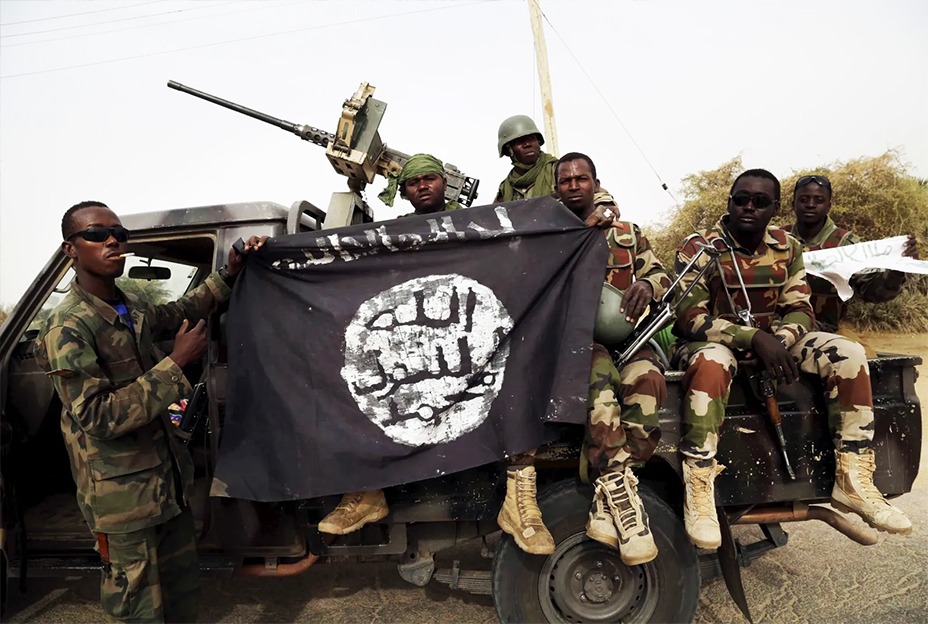
Photo: Thechronicle.com.gh
The Government Says Progress, But Ask the Farmers in Borno
So the Northern States Governors' Forum met in Maiduguri last Saturday — inside Borno State itself, the very epicenter of this insurgency wahala — and their chairman, Gombe State Governor Inuwa Yahaya, stood up and told us that Boko Haram has been 'weakened but not completely defeated.' E be like say dem dey tell us fire don reduce but your house still dey burn. With respect to the governor, many Nigerians in the Northeast will tell you that statement sounds better in a press conference than it does at a funeral.
Let us not dismiss what the governors are saying entirely. There has been genuine progress in the fight against insurgency in the Lake Chad Basin region. The Nigerian military, working alongside the Multinational Joint Task Force, has disrupted Boko Haram's operational capacity significantly since the group's terrifying peak around 2014-2015, when they had seized territory larger than some European countries. Towns like Gwoza, Bama, and Monguno — which were once under the black flag — have been recovered. That is real. That deserves acknowledgment.
But here is where the tension starts, and e dey serious.
Between Press Releases and Petrol Bombs
The same week government officials gather in air-conditioned halls to discuss 'weakened insurgents,' ordinary people in Borno, Yobe, and Adamawa states are still navigating a very different reality. Farmers cannot access their own land without armed escorts. Fishermen on Lake Chad do so at mortal risk. IDP camps — Internally Displaced Persons camps — in Maiduguri are still bursting at the seams with people who fled their villages years ago and have nowhere safe to return to.
According to UNHCR data, over 2 million people remain displaced in the Northeast. Schools that were rebuilt have been attacked again. Aid workers operate under constant security threat. When government officials say 'weakened,' the question everyday Nigerians must ask is: weakened compared to what? Compared to 2015? Perhaps. But 'better than 2015' is a low bar when people are still dying.
And that is the core tension here — the gap between institutional language and lived experience. When a governor says 'not completely defeated,' what that phrase actually means for a widow in Konduga or a teenager who never returned to secondary school because his school was burned down is something entirely different from what it means in a government communiqué.
What 'Weakened Not Defeated' Actually Looks Like on Ground Level
Make we break this down in plain terms. Here is what the security situation in the Northeast still looks like, despite the 'weakening':
- Ambushes on highways — The Maiduguri-Damaturu road remains one of the most dangerous stretches of tarmac in Africa. Convoys still get hit. Soldiers still die. Civilians still disappear.
- Village raids and food theft — ISWAP, the Islamic State West Africa Province faction that split from Boko Haram, continues to raid farming communities, steal harvests, and impose 'taxes' on locals to fund their operations.
- Abductions — Kidnapping for ransom and forced recruitment have not stopped. Children are still being taken.
- Suicide bombings — While reduced in frequency compared to peak years, bomb attacks in markets and mosques still occur in the region.
So yes, the group has lost territory and senior commanders. But a 'weakened' insurgency that can still do all of the above is not exactly a bedtime story with a happy ending, abi?
The Governors Meeting in Maiduguri — Symbolism Matters But It Is Not Enough
One thing we should credit: holding the Northern Governors' Forum meeting in Maiduguri itself carries symbolic weight. It signals that the city — Nigeria's Northeast capital — is stable enough to host a major government gathering. That is a message deliberately sent to investors, citizens, and the international community. We see you, governors. The optics are appreciated.
But symbolism without sustained policy action is just photo opportunity. The Northeast needs more than annual summits and carefully worded statements. It needs consistent federal funding for reconstruction, genuine reintegration programs for repentant fighters that actually work, economic investment that gives young men an alternative to radicalization, and most critically — honest communication with Nigerians about exactly how long this war will last and what victory actually looks like.
Governor Yahaya also called for continued support from the federal government and international partners during the meeting. That is the right call. But the Northeast has been hearing that call for over fifteen years now. What has changed in how that support is being delivered and measured?
The Bigger Question Nobody Wants to Answer
Here is the uncomfortable truth that sits in the middle of this whole conversation: Nigeria has been fighting Boko Haram since 2009. That is over fifteen years. The children born the year this insurgency started are now adults — some of them have known nothing but war in the only region they call home.
At what point does 'weakened but not defeated' become an acceptable permanent state of affairs? Because that is what it has been, effectively, for years now. The insurgency ebbs and flows. Military operations push the groups back, they regroup, they adapt, they attack again under a slightly different name or structure. ISWAP is essentially Boko Haram with better PR and military strategy.
The governors are not wrong to hold meetings and report progress. That is their job. But Nigerians — especially those in the Northeast who bear the actual cost of this conflict in blood, displacement, and lost futures — deserve more than managed expectations. They deserve a roadmap with honest timelines and accountability.
So Where Do We Go From Here?
The Northern Governors' Forum meeting in Maiduguri is a conversation starter, not a conclusion. 'Weakened but not defeated' should be a call to finish the job, not a reason to ease the pressure. Nigeria has the military capacity. The question is whether we have the political will, the economic investment, and the long-term commitment to actually end this thing properly — or whether we are content to manage a bleeding wound indefinitely.
For the traders in Maiduguri market, the teachers who want to return to rural schools, and the farmers who just want to harvest their own land in peace — they are not interested in carefully calibrated government language. They want results. And honestly? After fifteen years, who can blame them?

Comments
Post a Comment