


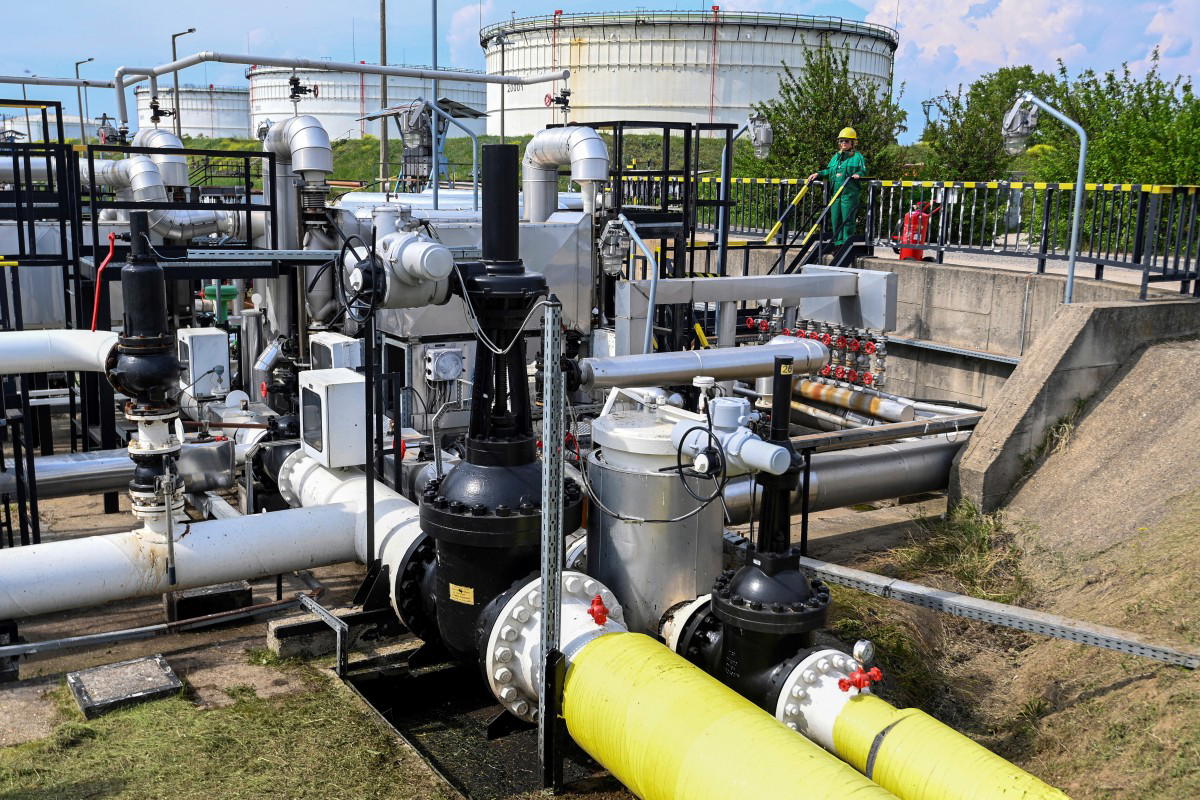
Photo: Vanguard
The Labour Congress Has Had Enough — And Honestly, Who Can Blame Them?
Make we be honest with ourselves for a second. When petrol was N185 per litre, things were already tight for the average Nigerian worker. Now that we're staring at prices that have more than tripled in many places, the Nigeria Labour Congress (NLC) has finally stepped up to the microphone and said what millions of suffering Nigerians have been screaming in their hearts — enough is enough.
The NLC is demanding two major things from the Federal Government: first, an immediate wage award for workers across board to help them cope with the crushing cost of living, and second, that crude oil supplied to local refineries — including the long-awaited Dangote Refinery — be paid for in naira rather than dollars. Both demands are connected to one painful reality: fuel prices in Nigeria have become a weapon against the very people keeping this country running.
What Is a "Wage Award" and Why Should You Care?
For those who might be wondering, a wage award is essentially an emergency salary top-up. It is not a permanent salary increase — think of it more like a special allowance that employers (including the government) give to workers to help them survive a particularly brutal economic period. Nigeria has done this before. In 2012, after fuel subsidy removal protests rocked the country, there were negotiations around palliatives for workers. The NLC is basically asking for something similar now.
And e make sense sha. Consider this: a civil servant earning the current minimum wage of N30,000 per month — which many state governments haven't even fully implemented — is now spending a significant chunk of that just on transportation to and from work. Add food, rent, school fees, and the man or woman is already operating at a deficit before the month even ends. A wage award would at least give workers a fighting chance to survive the month without borrowing from Peter to pay Paul.
The Naira-for-Crude Demand: This One Is Deeper Than It Looks
Now this second demand is where it gets very interesting, and very political. The NLC wants the government to ensure that crude oil supplied to domestic refineries is purchased in naira — not in US dollars. Currently, because transactions are denominated in foreign currency, local refineries are at a disadvantage, and the cost of refined products ends up being pegged to exchange rate fluctuations that have been nothing short of chaotic.
Think about it this way: if Dangote Refinery or any other local refinery has to buy crude in dollars, and the naira is exchanging at over N1,500 to a dollar, then the final pump price of petrol will continue to reflect those dollar costs. But if the same crude is sold to these refineries in naira — at a controlled rate — the cost of production drops, and theoretically, so should the pump price.
This is not a new idea. The Naira-for-Crude arrangement was actually being piloted earlier in 2024, but it hit several roadblocks including disagreements between the NNPCL and major oil producers over pricing and implementation. The NLC is essentially demanding that government stop dragging its feet and make this policy work properly.
What Does This Mean for the Average Naija Worker on the Street?
Let's break it down plainly:
- Higher take-home pay (temporarily): If the wage award is approved, workers — especially in the public sector — would receive additional money on top of their salaries. For a teacher in Lagos or a nurse in Kano, that extra cash could mean the difference between eating balanced meals and surviving on garri and groundnut.
- Cheaper fuel (eventually): If the naira-for-crude policy is properly implemented, local refineries could produce petrol at lower costs, which should — in theory — reduce pump prices over time. We say "in theory" because this is Nigeria, and between policy announcement and actual implementation, many things can happen.
- Reduced transportation costs: If fuel prices drop, commercial bus operators (danfo, keke, okada) would have less excuse to charge the kind of fares that are currently giving people heart attacks across the country.
- Possible inflation pressure: Here's the flip side — economists will tell you that wage awards, if not carefully managed, can actually fuel inflation. If everyone suddenly has more money but the supply of goods hasn't increased, prices simply go up. So the government has to balance this carefully.
Will the Government Actually Listen? Oga, Let's Be Real
This is the N1 million question — or should we say, the N1 billion question given where inflation has taken us. The Tinubu administration has shown willingness to engage with labour in the past, especially after the push for the new N70,000 minimum wage. But translating engagement into action has historically been where things fall apart in Nigeria.
Several factors will determine whether the government bends to NLC's pressure:
- Federal budget constraints: The government is already managing a very tight fiscal situation with debt servicing gulping a massive chunk of revenue. Finding money for wage awards across the federal workforce won't be easy.
- State government compliance: Even if the Federal Government approves wage awards, many state governments are notorious for delaying or outright ignoring such directives. Remember how many states dragged their feet on the N30,000 minimum wage for years? Same energy.
- Political calculations: With governorship elections coming up in some states and the 2027 general election already casting its shadow, the government may calculate that keeping workers reasonably happy is in their political interest.
- International pressure: The IMF and World Bank have been watching Nigeria's subsidy removal journey. They might push back against measures that they consider a backdoor form of subsidy or fiscal recklessness.
The Bottom Line: Workers Are Tired, and They Have a Point
At the end of the day, the NLC's demands are not unreasonable. Nigerian workers have absorbed enormous economic punishment since the fuel subsidy removal in May 2023. They were told to be patient, that the pain would be temporary, that prosperity was around the corner. Many of them are still waiting at that corner.
A wage award is not a solution to Nigeria's structural economic problems — everybody knows that. But it would be an acknowledgment from the government that it sees the suffering, and that it is willing to share some of the burden. The naira-for-crude policy, if properly implemented, could have more lasting impact on fuel prices and cost of living.
Whether President Tinubu and his economic team will act swiftly on these demands or give NLC the classic government runaround remains to be seen. But one thing is clear — Nigerian workers are watching, they are organized, and the NLC has shown before that it is not afraid to call a strike when pushed too far.
The ball is in the Federal Government's court. E remain to see whether them go play ball or dodge the question as usual.

Comments
Post a Comment