

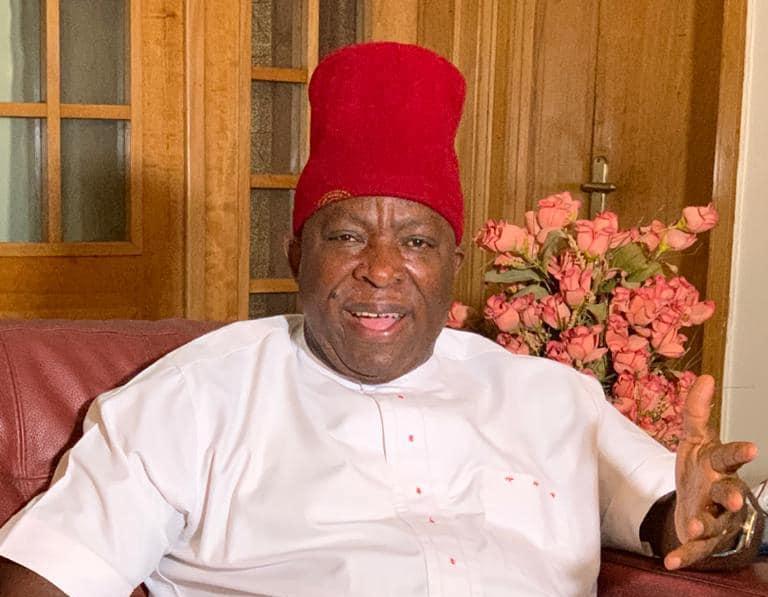
Photo: Vanguard
The Ballot Box Should Be Supreme — Not the Courtroom
Senator Victor Umeh of Anambra Central has spoken, and honestly? The man dropped something that many Nigerians have been feeling in their bones for years but haven't had the platform to shout. On Monday, the Labour Party senator made it crystal clear — courts should not be the ones deciding who wins Nigerian elections. Votes should count. Period. Full stop. No story.
Umeh was reacting to former presidential candidate and Labour Party's Peter Obi's renewed calls for electoral justice in Nigeria, and his position sparked a conversation that this country desperately needs to have. Because e don do — we cannot continue like this, where the ballot box becomes just a formality and the real winner is determined by whoever has the better lawyers and deeper pockets to fight cases in tribunal for four years.
How Did We Get Here? A Brief History of Election Wahala
Let's be honest with ourselves as Nigerians. The pattern has become almost predictable at this point. Elections are conducted, results are announced, and then — like clockwork — the litigation begins. Cases drag on for months, sometimes years. And by the time judgment is delivered, the person who allegedly lost is already halfway through their term in office. Where is the justice in that?
Think about it this way. You go to a market, you buy ogi and akara with your hard-earned naira, but by the time the seller gives you your change, the market don close and you're already hungry. What was the point? That's exactly how Nigerian voters feel when election results get tossed around in courts while the "winner" is already signing budgets and making appointments.
Several high-profile election cases in Nigerian history have seen governorship and senatorial mandates transferred from one candidate to another through judicial pronouncements — long after the electoral process had supposedly concluded. The 2023 general elections alone produced hundreds of tribunal cases, with outcomes that left many Nigerians shaking their heads in disbelief and asking serious questions about the integrity of the entire system.
Victor Umeh's Point Is Not Just Politics — It's Principle
Now, some people will hear Senator Umeh's statement and immediately say, "Ahan, but is he not the same person who has benefited from electoral disputes before?" Fair point — that's the nature of Nigerian political discourse, and we don't do ourselves any favours by ignoring context. But strip away the politics for a moment and look at the substance of what he's saying.
The argument is straightforward: democratic legitimacy flows from the people, not from judges. When a court overturns an election result — especially one where INEC declared a winner — it sends a deeply troubling message to every Nigerian who stood in line under the hot sun to cast their vote. It tells them that their collective decision can be nullified by a handful of legal arguments in an air-conditioned courtroom.
And this is not just about one party or one candidate. This is about the soul of Nigerian democracy itself. E get levels to this thing.
Why This Undermines Public Trust — And Voter Turnout
Here's the part that should worry every well-meaning Nigerian: when voters believe their votes don't actually determine outcomes, they stop voting. It's that simple. Why would a young man in Onitsha or a market woman in Kano wake up at 5am, queue for hours, and cast their ballot if the result can simply be "restructured" in court?
Nigeria's voter turnout has been a concern for several election cycles now. The 2023 presidential election recorded one of the lowest turnout percentages in recent memory — hovering around 27%. That number should terrify every politician and every election stakeholder. When barely one in three eligible voters bothers to show up, something is fundamentally broken in the relationship between citizens and their democracy.
The growing cynicism among Nigerian youth especially — the same young people who energised the 2023 elections with the #ObiDatti movement and similar grassroots campaigns — is deeply connected to this sense that the system is rigged from top to bottom. From ballot manipulation to tribunal gymnastics, the message they keep receiving is: your vote is just the beginning of someone else's game.
What Needs to Change — And Fast
If we're serious about fixing this, here's what the conversation should be moving towards:
- Strengthen the electoral process before Election Day: INEC needs the independence, funding, and technology to conduct elections that are so transparent and credible that there's simply no basis for serious court challenges. The BVAS system was a step in the right direction — but implementation must be consistent and tamper-proof.
- Compress legal timelines for election disputes: If cases must go to tribunals, let there be strict timelines — not the current situation where judgments come when the political damage is already done.
- Criminalise election manipulation at every level: From party primaries to collation centres, those who manipulate results should face real consequences — not just lose their seats, but face prosecution.
- Educate voters on their rights and roles: Civic education must be taken seriously. An informed electorate is the first line of defence against electoral fraud.
The Bottom Line: Make Your Vote Count From the Ballot, Not the Bar
Senator Victor Umeh's statement is a reminder that Nigeria's democracy is still a work in progress — and that those within the system need to speak up when it's going wrong, regardless of which party benefits or loses in any particular instance. The credibility of Nigerian elections must be restored, and that restoration has to start at the source: the ballot box.
Because when votes genuinely count — when every Nigerian knows that the person they elected on Election Day will actually serve them, not the one who hired the most expensive Senior Advocates — that's when voter turnout will climb, that's when trust will be rebuilt, and that's when we can truly say we are practising democracy and not just performing it for the cameras.
Abeg, make we get this thing right. The future of this country depends on it.
Comments
Post a Comment