

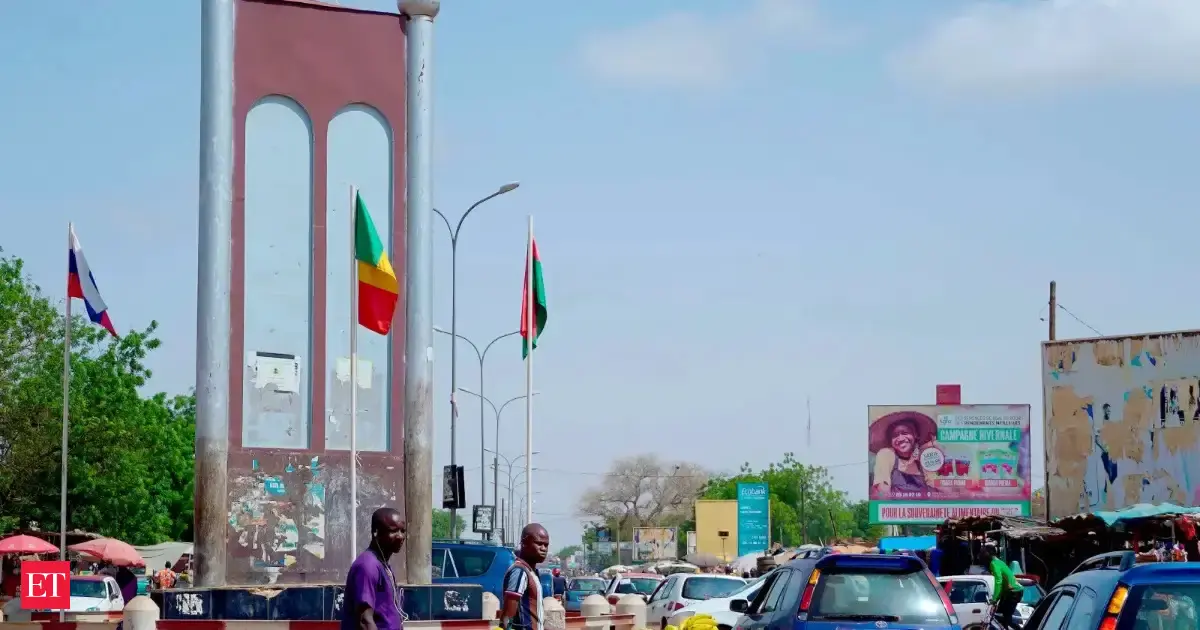
Photo: The Times of India
Niamey Nearly Exploded — And Moscow Was There to Stop It
E be like say trouble no dey finish for West Africa. Just when you think the Sahel region don settle small, another fire don burst. Niger's capital, Niamey, woke up last week to the sound of boots and gunfire — soldiers turning against their own junta government in a dramatic 24-hour mutiny that nearly upended the fragile military rule that has gripped the country since the 2023 coup. But here's the twist that should make every Nigerian sit up straight: it was Russian forces, not ECOWAS, not Nigerian troops, not any African body, that helped crush that uprising. Let that sink in.
What Actually Happened at That Airport
According to reports coming out of Niamey, a group of soldiers staged a mutiny centered around the city's airport. The grievances? Classic military discontent — worsening security conditions on the ground, poor welfare packages, and the general frustration of fighting a losing battle against jihadist insurgents in some of the world's harshest terrain. These soldiers were not staging a coup for ideological reasons; e be like say dem just reach their breaking point.
The ruling junta, led by General Abdourahamane Tchiani, mobilized loyal forces to push back. But here's the kicker — Russian troops from what is widely believed to be the Africa Corps (formerly Wagner Group) were reportedly part of the forces that helped restore order. The mutiny was suppressed within 24 hours, and Niamey returned to its uneasy calm. No long story. Crisis managed. But at what cost, and more importantly, whose hands are now deeper in Niger's affairs than ever before?
Russia Is Now the Real Power Broker in Our Backyard
Make we be honest with ourselves. When France was pushed out of Niger after the 2023 coup — crowds waving Russian flags in the streets of Niamey — many people thought it was a nationalist moment. Africans taking their destiny into their own hands. But wetin we dey see now tells a different story.
Niger's junta kicked out French troops, withdrew from ECOWAS, and aligned themselves firmly with Moscow. In exchange for political backing and military muscle, Russia now has boots on the ground in a country that shares a very long, very porous border with Nigeria's northwest. The same northwest that is already bleeding from banditry, kidnapping, and the tail end of Boko Haram's reach. This is not abstract geopolitics. This is our neighborhood.
Russia's military presence — under whatever name you want to call them — is not charity work. They are there because Niger sits on uranium deposits that power French nuclear plants. They are there because the Sahel is a strategic corridor. And they are now deep enough in Nigerien affairs that they are literally putting down internal revolts on behalf of a junta government. That kind of influence doesn't come without strings. Long, dangerous strings.
ECOWAS: The Dog That Barked But Refused to Bite
Remember when ECOWAS threatened military intervention after the Niger coup in 2023? Deadlines were set, troops were placed on standby, and Nigeria — as the regional giant — was expected to lead the charge. Then... nothing happened. The threats fizzled. The junta called the bluff. Niger, Mali, and Burkina Faso formed their own Alliance of Sahel States and told ECOWAS where to go.
Now, as Niger's internal crisis plays out with Russian assistance, ECOWAS is nowhere in the conversation. The bloc looks increasingly like a talking shop — full of communiqués and summits but short on actual influence where it matters. And that is a serious problem for Nigeria, which has historically been the engine of ECOWAS and the one country that pours the most into keeping the regional body relevant.
Nigeria spends significant diplomatic energy and financial resources propping up an organization that is losing ground — literally — to Russian influence and military governments that have zero interest in democratic governance. Our foreign policy priorities need some serious re-examination, abeg.
What This Means for Nigeria's Security
Let's bring this home, because that's what really matters. Niger shares over 1,500 kilometers of border with Nigeria. It is one of our most important neighbors. Instability there doesn't stay there — it leaks. Refugees, weapons, fighters, and criminal networks move across that border with frightening ease.
The fact that Niger is now effectively a Russian client state, with an unstable military government facing internal dissent from its own soldiers, is a red alert for Abuja. Here's why:
- Border Security Collapse: A junta busy putting down internal mutinies cannot effectively police its borders. Baddie people — whether jihadists from JNIM or ISIS-Sahel or plain old bandits — will exploit every crack in Niger's security architecture to push further south toward Nigeria.
- Intelligence Blackout: Nigeria and Niger used to share security intelligence. That cooperation has largely broken down since the coup. We are now flying partially blind on threats developing right next door.
- Russian Proximity: Having Russian military forces operating right on our border is a completely new strategic variable that Nigeria's security planners must factor in. These are not neutral actors.
- Refugee Pressure: If Niger's internal situation deteriorates further, the human movement toward Nigeria's north will intensify, straining already overwhelmed communities in Sokoto, Kebbi, and Zamfara states.
Nigeria Must Wake Up and Play Smarter
The honest truth is that Nigeria cannot afford to keep reacting to Sahel crises after they explode. Our foreign policy toward the region needs to be more proactive, more strategic, and frankly, more resourced. We cannot lose the diplomatic war in our own neighborhood to Moscow.
President Tinubu's administration has tried to re-engage with the Sahel juntas through dialogue, but there's only so much sweet talk can do when your neighbors have already chosen a different patron. Nigeria needs to use its economic leverage — Niger depends heavily on trade access through Nigeria — more intelligently, while also investing seriously in border security infrastructure that doesn't rely on our neighbors' cooperation.
ECOWAS also needs to either reform drastically or Nigeria needs to rethink how much political capital it invests in that body. An organization that cannot respond effectively to coups on its doorstep is not serving Nigerian interests.
The Bottom Line
Niger's 24-hour mutiny was quelled. Niamey is calm. But the deeper story is this: Russia is now the guarantor of security for a country on Nigeria's doorstep, ECOWAS has been sidelined, and the Sahel is drifting further into a geopolitical orbit that does not favor Nigerian interests or African democratic values. If we don't pay serious attention to wetin dey happen for our backyard, we go wake up one day and find the fire don reach our compound. And by then, e go don too late to be asking questions.
Comments
Post a Comment