


Photo: The Conversation Africa
The People Lagos Calls 'Illegal' Are Actually Saving the City
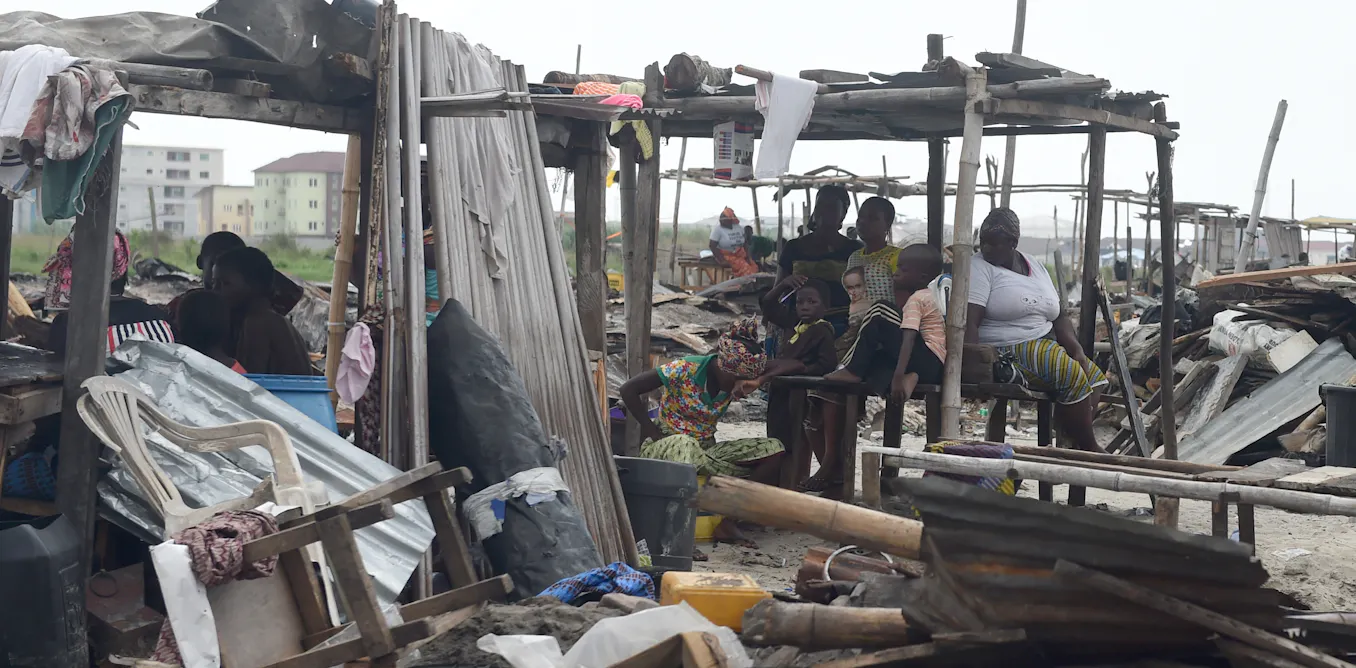
Every time the Lagos State government rolls in with bulldozers to flatten another waterfront community, officials celebrate like they've done something progressive. They post photos on social media, talk about 'urban renewal' and 'environmental sanitation,' and congratulate themselves for cleaning up the city. But here's what nobody is saying out loud: Lagos is systematically destroying the very people and systems that have been quietly protecting this city from flooding, storm surges, and the worst effects of climate change. And we're paying serious money to do it.
Make we talk true today. The residents of Makoko, Otodo Gbame, and dozens of other waterfront settlements that Lagos has either demolished or is planning to demolish are not the problem. They are, whether anyone wants to admit it or not, the solution.
Makoko: The 'Floating Slum' That Is Actually a Climate Masterclass
For years, mainstream media has sold us the narrative that Makoko — that sprawling water community straddling Lagos Lagoon — is nothing but poverty and disorder on stilts. International journalists come, take their dramatic drone shots, write their poverty tourism articles, and leave. But if you actually talk to the people who have lived there for generations, a completely different story emerges.
Makoko residents have spent decades developing what urban planners and climate scientists now recognise as sophisticated adaptive strategies. Their stilt structures are deliberately designed to allow water to move freely underneath. Rather than fighting the lagoon, they've built a relationship with it. When the rainy season comes and water levels rise, Makoko rises with it. No catastrophic flooding. No emergency rescue operations. The community literally floats through the crisis.
Compare that to what happens in the 'planned' parts of Lagos — places like Lekki, Ajah, and parts of Lagos Island — where billions of naira in drainage infrastructure still cannot stop neighbourhoods from submerging under two hours of heavy rain. The irony is thick enough to choke on.
The Mangrove Problem Nobody Wants to Discuss
Here's the gist that most Lagos residents don't know: mangrove forests are one of the most powerful natural barriers against flooding and coastal erosion on the planet. They absorb wave energy, filter water, trap sediment, and provide habitat for marine life that sustains fishing communities. Lagos used to have extensive mangrove coverage along its coastline and waterways.
Guess who has been protecting those mangroves by simply living alongside them in ways that don't destroy them? Waterfront settlers. And guess what happens to mangroves when those communities are forcibly removed and replaced with concrete development? They disappear. When Otodo Gbame was demolished in 2017, one of the most brutal evictions in Lagos recent history, the mangrove buffer that community had coexisted with for generations gave way to development pressure almost immediately.
Scientists at institutions like the University of Lagos have been raising alarm bells about coastal erosion accelerating along areas where informal settlements have been cleared. But this information is not reaching the decision-makers, or more likely, it is reaching them and they simply don't care.
What These Communities Actually Do
Let's break down the specific climate functions that waterfront informal settlements perform, because this is important:
- Water management: Residents who live on and near canals have an intimate, daily knowledge of water flow patterns. They know which channels are becoming blocked, when water is rising abnormally, and how to navigate during floods. This knowledge, accumulated over generations, is more valuable than any government agency's flood prediction model.
- Waste interception: Yes, critics love to say these communities dump waste into the water, and some do. But many waterfront communities have also developed informal systems to manage waste specifically because they live with the consequences. Some Makoko residents actively fish out plastic from the lagoon daily — not because any government programme told them to, but because their survival depends on the health of that water.
- Shoreline stabilisation: The organic materials used in stilt construction and the physical presence of structures anchored into the lagoon floor actually help stabilise shorelines in ways that prevent erosion. Remove the structures abruptly, and you destabilise the lakebed.
- Early warning systems: These communities are the first to notice environmental changes — unusual water colours, dead fish, shifting currents. They are living sensors in Lagos's most vulnerable ecological zones.
The Government's Backwards Logic
The Lagos State government's position is essentially this: these settlements are illegal, they're environmental hazards, and removing them is good for the environment and for urban development. This logic falls apart the moment you examine what replaces these communities after demolition.
It's not parks. It's not restored wetlands. It's not climate-resilient infrastructure. What replaces these communities is typically upscale real estate development — concrete, glass, reclaimed land, and the kind of impermeable surfaces that guarantee that every heavy rainstorm becomes a flood emergency. The Eko Atlantic project, built on reclaimed land right there in Lagos, is already showing signs of the kind of hubris that comes from thinking you can simply replace natural coastal systems with engineering.
Meanwhile, the actual poor people who were displaced from those waterfront communities? They've been pushed further into the city into areas with even less infrastructure, creating new overcrowded settlements that lack even the organic climate-coping mechanisms of the communities they left.
What Should Actually Happen
The answer is not to pretend that all informal settlements are perfect or that there are no genuine environmental concerns in communities like Makoko. The answer is to stop treating demolition as urban planning and start treating these communities as partners in climate adaptation.
Cities in countries like Vietnam, Bangladesh, and even some parts of South Africa have begun implementing what planners call 'in-situ upgrading' — improving infrastructure within existing settlements rather than destroying them. You improve sanitation. You formalise land tenure so residents have security and therefore invest in their own improvements. You work with community knowledge rather than against it.
Lagos has the resources and the expertise to do this. What it appears to lack is the political will, especially when waterfront land carries premium commercial value that developers are very willing to pay for.
The People Being Erased Are Climate Heroes
The grandmother in Makoko who has lived on the lagoon for sixty years knows things about how that water behaves that no government consultant with a clipboard can learn in a week-long study. The fisherman who notices that the water level is rising faster than usual this year is performing a climate monitoring function. The community that has organised itself to clean its section of canal is doing environmental work.
Nigeria is facing serious climate challenges — rising sea levels, more intense rainfall, coastal erosion, extreme heat. Lagos, sitting right on the Atlantic coast, is on the front line. In that context, bulldozing communities that have developed genuine, lived expertise in coexisting with water is not just cruel. E no make sense at all. It is actively making Lagos less resilient, less prepared, and more vulnerable to the climate shocks that are definitely coming.
The city needs to decide: Are these communities the problem, or are they part of the solution? Because right now, Lagos is answering that question with a bulldozer, and all of us — not just waterfront residents — will eventually pay the price.

Comments
Post a Comment