


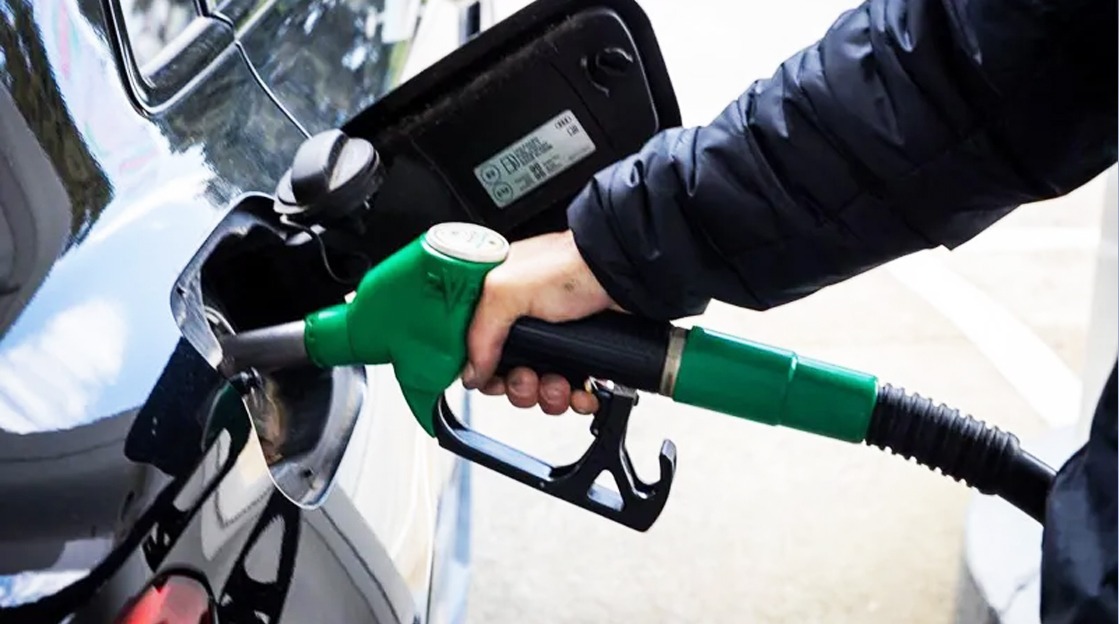
Photo: Thechronicle.com.gh
Naija Wallets on Edge as Global Oil Prices Keep Sliding
If you have been sweating every time you approach a filling station or enter a danfo these days, there might be some small relief on the horizon — emphasis on might. Global crude oil prices took another dip on Monday, and Nigerians everywhere are now doing the one thing we do best: hoping, praying, and calculating.
Brent crude fell to around $101.5 per barrel while West Texas Intermediate, WTI, also slipped further down. For many market watchers and everyday Nigerians alike, this is the kind of news that makes you pause your morning puff puff and actually listen to the radio. Because when oil prices fall globally, the logical expectation is that we should feel it at the pump. But as we all know, logic and Nigerian fuel pricing don't always move together — and that is putting it gently.
From the Filling Station to Your Mama's Kitchen
Let's break this down the way your area mechanic would explain it — simple and straight. When petrol prices are high, everything suffers. That okada man charging you ₦500 for a trip that used to cost ₦150? Na fuel price dey drive that. The woman selling beans and plantain at your junction who suddenly added ₦100 to her plate? Same fuel. The sachet water guy, the bread seller, the buka near your office — everyone in this economy is passing fuel costs down the chain until it lands squarely in your pocket.
Transport costs alone have become a serious burden for millions of Nigerians. Workers who commute daily in Lagos, Abuja, Port Harcourt, and other major cities are spending a frightening chunk of their income just getting to work and back. A civil servant earning ₦30,000 monthly — and yes, many still earn that — can easily spend ₦10,000 to ₦15,000 on transportation alone. That leaves almost nothing for food, rent, school fees, and the other 47 things life demands of you.
What a Pump Price Reduction Would Actually Mean
Now, if the government decides to pass on these crude oil savings to Nigerians through a reduction in Premium Motor Spirit pump prices, the ripple effect could be significant. And when we say significant, we mean the kind of thing that makes market women smile and bus drivers stop giving you attitude when you complain about fares.
- Transport fares could drop: This is the most immediate benefit. When fuel becomes cheaper for commercial drivers and logistics companies, there is at least some pressure — social and economic — to reduce what they charge passengers and customers.
- Food prices might ease: Almost everything you eat in Nigeria moved on a truck or a motorcycle at some point. Lower fuel costs mean lower logistics costs, which should theoretically bring down food prices. Whether traders actually pass on those savings is another matter entirely — but the potential is real.
- Small businesses get breathing room: The hairdresser running a generator, the cold room operator, the small-scale manufacturer — they all feel fuel prices in their daily operations. Any reduction gives them a chance to stabilize their costs and maybe, just maybe, stop passing every naira of expense to customers.
- Reduced pressure on household generators: With electricity supply still being what it is in Nigeria, many homes and businesses depend on generators. Lower PMS prices means your generator swallowing less of your monthly budget.
But Hold Your Horses — This Is Nigeria
Before you start celebrating and budgeting that extra money, let us be realistic. Nigeria has a complicated relationship with fuel subsidies, deregulation, and pricing mechanisms. The removal of the fuel subsidy earlier in 2023 under President Bola Tinubu's administration sent pump prices soaring to historic levels, and many Nigerians are still recovering from that shock.
The question now is whether the downstream sector regulators and oil marketers will reflect this global price drop at the pump anytime soon. In a deregulated market — which is what we technically have now — pump prices are supposed to respond to international crude prices. That means both going up AND coming down. We have seen the going up part plenty of times. The coming down part? That one tends to move like NEPA electricity — slowly, if at all.
Industry stakeholders have noted that while global prices are dropping, the exchange rate situation in Nigeria still plays a major role in what Nigerians pay for fuel. Since crude and refined products are priced in dollars, a weak naira can offset the gains from falling global oil prices. So even if Brent crude drops to $90 tomorrow, if the naira continues to struggle at the official and parallel markets, that relief might not fully reach your fuel tank.
The Street Is Watching
On the streets of Lagos and beyond, Nigerians are not leaving anything to chance. Market traders, transport union members, and ordinary commuters are all monitoring the news carefully. The kind of vigilance Nigerians apply to fuel prices should honestly be bottled and sold — we miss nothing.
For now, the message to everyday Nigerians is this: the global signals are pointing in a favorable direction, and there is genuine reason to be cautiously hopeful. But keep your eyes open, track your spending, and if you have government representatives you can reach — local, state, or federal — this is exactly the kind of moment to hold them accountable for ensuring that global oil price drops actually translate to real relief on Nigerian roads, in Nigerian markets, and in Nigerian homes.
Because at the end of the day, the price of fuel in this country is not just a number on a signboard at the filling station. It is the difference between a family eating well or managing, between a business surviving or closing, between a worker affording their commute or trekking home in the rain. And every Nigerian deserves to feel the benefit when the global numbers move in our favour.

Comments
Post a Comment