


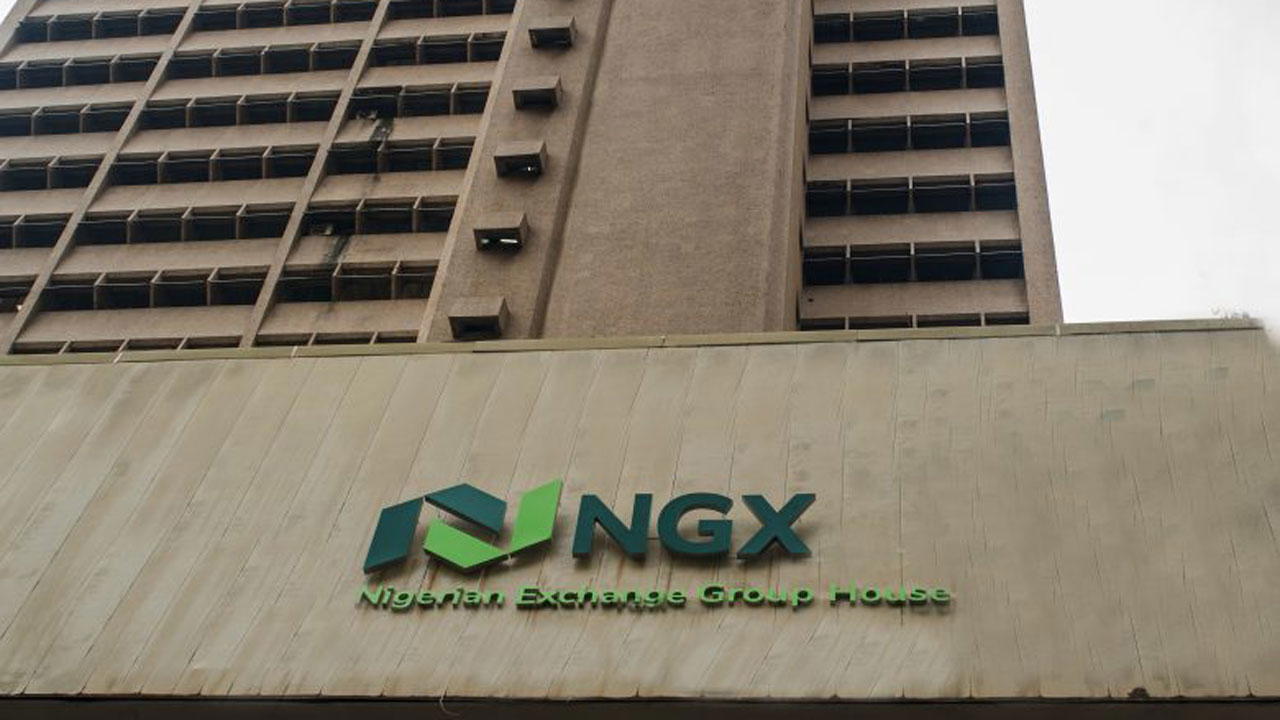
Photo: Vanguard
Your Investment Portfolio May Be in Serious Trouble
Chai! If you have money tied to the Nigerian Exchange Limited — whether through direct stock investments or your Pension Fund Administrator — this is one gist you cannot afford to scroll past. At least nine companies listed on the NGX are currently in deep financial wahala, with their shareholders' funds turning negative and their Returns on Equity (ROE) looking like something you'd cry over at the end of a bad market day.
Let's break this down in plain English — or plain Naija, sef. When a company's shareholders' funds go negative, it means the business owes more than it owns. Imagine spending more than your salary every month, piling up debt, and your account balance is consistently in the red. That's exactly what these companies are doing — on a massive, corporate scale. And ordinary Nigerians, including market traders who invested their little savings and civil servants counting on their pension, are the ones left holding the bag.
So, Which 9 Companies Are We Talking About?
Based on available financial data and reports from market analysts tracking the NGX, the companies currently showing significant balance-sheet stress include:
- Transcorp Hotels Plc — Once a darling of hospitality investors, the company has been struggling under heavy liabilities that have eroded equity positions significantly.
- Caverton Offshore Support Group — The aviation and marine logistics firm has seen its financials deteriorate amid rising operational costs and forex pressure.
- Ikeja Hotel Plc — Another hospitality stock bleeding red ink, with shareholders' funds deep in negative territory.
- DN Tyre & Rubber Plc — This one has been struggling for years, and the numbers are not getting any prettier, my friend.
- Nigerian Aviation Handling Company (NAHCO) — Despite some operational activity, balance sheet pressure remains a serious concern for equity holders.
- Omatek Ventures Plc — The tech hardware company that was supposed to be Nigeria's answer to global PC manufacturing has basically flat-lined financially.
- Regency Alliance Insurance — Even in the insurance sector, this firm's equity position has been negative, which raises serious red flags for policyholders and investors alike.
- ABC Transport Plc — The transportation company continues to post weak returns with shareholders' equity badly battered.
- University Press Plc — Once considered a steady, boring-but-reliable stock, even this educational publisher is now showing strain under current economic conditions.
What Does "Negative Shareholders' Fund" Actually Mean for You?
Let's use a simple analogy. Imagine you give someone ₦500,000 to manage a business for you. Negative shareholders' fund means if that business shuts down today, not only will you get nothing back — the business actually owes additional money on top of what you invested. Your ₦500,000 has effectively disappeared, and there may even be additional liabilities chasing the company.
For ordinary Nigerians who bought shares in any of these companies thinking they were building generational wealth — e meela gi obi (it is heartbreaking). The reality is that holding equity in a company with negative ROE and eroded capital base is like watering a dead plant. The dividends won't come, the share price keeps dipping, and the outlook remains bleak unless serious restructuring happens.
The Pension Fund Connection Nobody Is Talking About
Here's where it gets even more serious, abeg. Many Nigerians don't directly buy stocks, but their Pension Fund Administrators (PFAs) invest their retirement savings on the NGX on their behalf. If your PFA has exposure to any of these nine distressed companies — and some do — then your retirement money is quietly taking a hit while you're busy grinding at work, thinking everything is fine.
The National Pension Commission (PenCom) has regulations limiting how much of pension funds can go into equities, which offers some protection. But the reality is that market exposure to companies in this kind of financial distress still chips away at overall portfolio returns. That pension statement you receive every quarter? Look at it more carefully, biko.
Why Are These Companies in This Mess?
You can't talk about corporate financial distress in Nigeria in 2024 and 2025 without mentioning the elephant — or rather, the multiple elephants — in the room. The naira devaluation has been brutal for companies with dollar-denominated debt. When the Central Bank of Nigeria (CBN) liberalised the foreign exchange market, businesses that borrowed in dollars suddenly saw their naira liabilities multiply overnight. Add rising energy costs (generators don't run on prayers), high interest rates from commercial banks, and weak consumer purchasing power, and you have a perfect storm for balance sheet destruction.
For companies in hospitality, transportation, and manufacturing — sectors heavily represented in our list of nine — the cost pressures have been relentless. Revenue growth simply cannot keep up with the pace at which expenses are rising.
What Should Nigerian Investors Do Right Now?
First, no panic — but also, no sitting down and doing nothing. Here's practical advice:
- Review your portfolio today. Log into your stockbroker account and check if you hold shares in any of these companies. Knowledge is power, abeg.
- Talk to your PFA. Request a breakdown of what equities your pension fund is exposed to. You have that right as a contributor.
- Don't average down blindly. Some investors think buying more shares of a falling company is smart — it isn't, especially when fundamentals are broken.
- Diversify, diversify, diversify. Spread your investments across sectors and asset classes. Putting everything into NGX equities alone in this economy is a gamble.
- Monitor company quarterly reports. The NGX mandates disclosure — use it. Any signs of restructuring, debt-to-equity conversion, or new management could change the story.
The Bottom Line
Nine companies on the NGX being in financial distress is not just a Wall Street-style business story for analysts in glass offices. This is about the market woman in Lagos who put her savings into shares, the civil servant in Abuja whose pension is invested in these markets, and the young professional who downloaded a trading app and bought stocks without fully understanding what balance sheets mean.
Nigeria's capital market can be a powerful tool for wealth creation — but only when investors are armed with real information. The NGX has rules requiring these companies to disclose their financials. The information is there. Now it's your job to use it.
As them dey say for market: buyer beware. In this economy, that warning has never been more relevant.

Comments
Post a Comment