

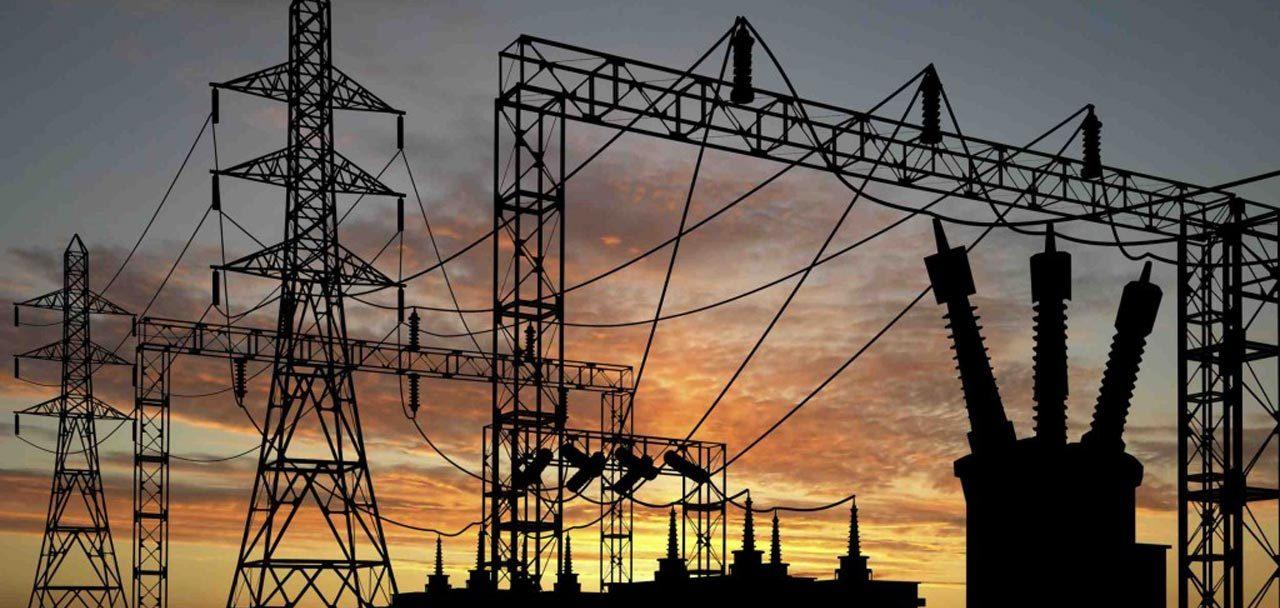
Photo: Vanguard
Your Share of the Greatest Heist You Never Knew About
Make we do simple mathematics together. Nigeria has roughly 200 million people. Government and its agencies have poured approximately N10 trillion into this country's electricity sector over the past 13 years. That means every single Nigerian — from the newborn baby in Maiduguri to the okada man in Mushin — effectively 'contributed' about N50,000 to fix our power supply. Your children contributed. Your grandmother contributed. That mallam selling suya by the roadside contributed.
And what did we all get in return? The same darkness. The same generator fumes choking our lungs at 2am. The same NEPA officials collecting money for light that never comes. The same small chops business owner who just watched her freezer full of meat spoil because PHCN decided today was not the day.
Sit down, because this gist is going to pain you well-well.
Where Did N10 Trillion Go? Oya, Let's Count
According to current sector analysis and electricity stakeholder reports, approximately N10 trillion in public finance has been either mismanaged, trapped in the sector's value chain, or simply swallowed by the system across various intervention programmes since 2010. This is not money that fell from the sky — this is taxpayer money, intervention funds, Central Bank of Nigeria (CBN) special credit facilities, and government bailouts, all channelled into a sector that, by every measurable standard, has refused to improve.
Think about what N10 trillion looks like in real life:
- You could build over 400 ultra-modern hospitals across Nigeria's 774 local government areas
- You could construct and complete the entire Lagos-Calabar coastal highway about three times over
- You could give every Nigerian household a solar power system with enough change to buy suya for the entire street
- You could fund Nigeria's entire education budget for roughly five consecutive years
Instead, we are here. Buying candles. Budgeting for diesel. Watching our phones die during WAEC exams. Arguing with the distribution company (DisCo) over estimated billing for electricity we didn't even use.
The Privatisation Promise That Became a Joke
Remember 2013? The year Goodluck Jonathan's administration privatised the Power Holding Company of Nigeria (PHCN) with so much fanfare you would have thought we were about to enter a new era? Nigerians were told that private sector efficiency would transform our power supply within years. Distribution companies (DisCos) and generation companies (GenCos) were handed over to investors who promised to inject capital, improve infrastructure, and light up the nation.
E no work out like that.
What happened instead? The DisCos collected electricity tariffs from Nigerians but failed to remit adequate payments to the generation companies. The GenCos couldn't pay gas suppliers. Gas suppliers stopped supplying gas. Plants went idle. The Nigerian Bulk Electricity Trading company (NBET) was stuck in the middle, managing a chain of debt that grew bigger every year. CBN had to intervene with emergency credit facilities. The Nigerian Electricity Regulatory Commission (NERC) was issuing warnings that nobody obeyed. And ordinary Nigerians? We kept buying diesel, keeping generator repairers in business, and praying for light like it was a miracle.
Who Exactly Has Been Collecting This Money?
This is where e get complicated, and where accountability has been consistently lacking. The N10 trillion figure includes intervention funds that passed through multiple hands — the Rural Electrification Agency, the Nigerian Electricity Management Services Agency (NEMSA), World Bank-backed programmes, CBN intervention loans to GenCos and DisCos, and various presidential initiatives with names that changed every four years.
The problem is that Nigeria's power sector accountability framework has more holes than NEPA's transmission lines. Regulatory bodies exist on paper. Audits are conducted but reports gather dust. Distribution companies that consistently fail to meet performance benchmarks still keep their licences. It is a system designed, almost perfectly, to swallow money without consequence.
According to sector watchers and energy analysts, a significant portion of these funds are described as 'trapped' — meaning the money entered the value chain but got stuck in unpaid invoices, stranded debts between sector players, and investments in infrastructure that was poorly planned or never completed. Another portion, bluntly speaking, went the way Nigerian public money usually goes.
The Real Victims: You, Me, and Every Small Business in This Country
Let's talk about the human cost, because the statistics alone cannot capture the full agony. Nigeria's epileptic power supply is estimated to cost the economy between $26 billion and $29 billion annually in lost productivity. Small and medium enterprises — the backbone of this economy — spend nearly 40% of their operational costs on alternative power generation. That is 40% of money that should be going into salaries, expansion, and product quality, instead feeding the pockets of fuel station owners and generator importers.
The student who could not study for JAMB because there was no light. The fashion designer who lost a client's fabric to a power surge. The diabetic patient whose insulin spoiled in a powerless fridge. These are not statistics — these are our neighbours, our family members, our people.
What Must Change — And Who Must Answer
Nigeria cannot continue on this path. The electricity sector requires not just money — it has clearly received enough of that — but transparent accountability, enforceable contracts, and genuine political will. DisCos that consistently underperform must lose their licences, full stop. Every intervention fund must be publicly audited with results published online. The regulatory commission must have teeth, not just talk.
President Tinubu's administration recently declared a state of emergency on the power sector. Nigerians have heard similar declarations before. What we have not seen enough of is prosecution, recovery of funds, and actual improvement in hours of electricity supply per day.
Until then, charge your power bank. The darkness is not going anywhere soon.
Got thoughts on Nigeria's power crisis? Drop your comment below and share this post — because sometimes the first step to change is making sure everyone knows exactly how much they've been taken for a ride.
Comments
Post a Comment