

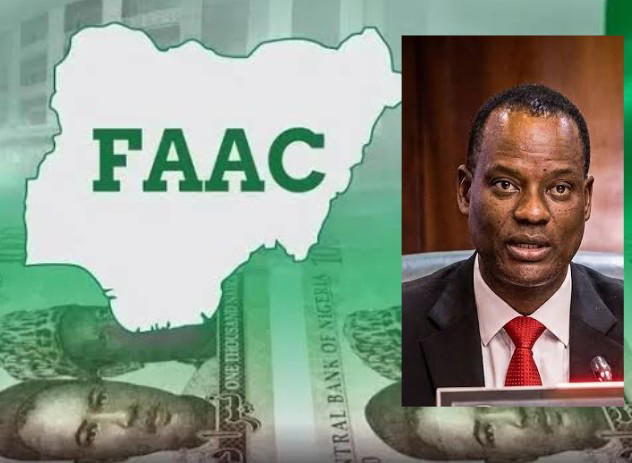
Photo: Vanguard
The Hard Truth Oyedele Just Dropped on State Governors
Oga, let's have a real conversation today. Prof. Taiwo Oyedele, Nigeria's Minister of Finance and Coordinating Minister of the Economy, just said something that many Nigerians have been thinking for years but nobody in government wanted to say out loud — federal allocations alone cannot make your state prosperous. Full stop.
Now, before you say 'politician talk,' let's break this down in plain English — or should we say plain Naija — because this statement touches your life directly, whether you are a trader in Kano market, a civil servant in Owerri, or a graduate hustling in Lagos.
What Exactly Did Oyedele Say?
Speaking recently, the Finance Minister urged state governments to stop sitting down and waiting for their monthly share from the Federation Account Allocation Committee (FAAC) like a child waiting for pocket money from daddy. Instead, he challenged governors to develop sustainable internal revenue sources and actively drive economic growth within their states.
In simple terms? Stop depending on oil money from Abuja. Find your own hustle.
This is not a small statement, because the truth is that many Nigerian states have built their entire financial existence around FAAC allocations. When oil prices drop, their budgets collapse. When the naira weakens, their plans scatter. The dependency is real and it is dangerous.
Let's Talk Numbers — Which States Are Most At Risk?
Now here is where e go pain some people. Several Nigerian states are so dependent on federal allocations that without Abuja's monthly sharing formula, they would struggle to pay salaries — let alone build roads or schools. Research and fiscal data from the Budget Office of the Federation and various financial analysts have consistently shown that some states generate embarrassingly little from their own internally generated revenue (IGR).
- Yobe State — This northeastern state has one of the lowest IGR figures in the country, often below ₦2 billion monthly, while receiving multiple times that from FAAC. Without federal transfers, the state's budget would be in serious wahala.
- Zamfara State — Despite sitting on significant gold deposits, Zamfara's IGR has historically been near the bottom of the national ladder. The irony is painful — you have gold under your feet and you're waiting for oil money from the south.
- Taraba State — Beautiful state with agricultural potential, yet IGR generation remains critically low. Federal allocation dependency here is extremely high.
- Kebbi State — Similar story. Rice production has helped a little, but the state still leans heavily on Abuja's monthly package.
- Adamawa State — Another state where the gap between IGR and federal receipts is wide enough to drive a trailer through.
On the flip side, states like Lagos, Rivers, and Ogun have done the work. Lagos State alone generates over ₦70-80 billion monthly in IGR — which is why Lagos can build BRT buses, construct roads, and still have money remaining after Abuja's allocation. That is the model Oyedele is pointing at.
What Does This Mean for You, Everyday Nigerian?
Ehen, now we reach your part of the gist. If you live in a state that is heavily dependent on federal allocations, here is what Oyedele's statement means in practical terms for your everyday life:
- Your salary as a civil servant is fragile — If your state's governor cannot generate enough IGR and FAAC payments are delayed or reduced (which happens during oil price crashes), your salary payment becomes a prayer point rather than a certainty.
- Infrastructure development will remain slow — States that don't have their own revenue streams can't execute serious capital projects. That road that has been under construction since 2019? Now you know part of the reason why.
- Business environment suffers — A state that is always broke cannot invest in the enabling environment that attracts businesses and creates jobs for young people.
- Education and health suffer most — When money is tight, the first things that get cut are the public schools and hospitals that everyday Nigerians depend on.
So What Should Governors Actually Do?
This is the question, abi? Oyedele isn't just pointing fingers — the solution is staring us in the face. Nigerian states are sitting on enormous untapped potential. Agriculture, tourism, solid minerals, technology hubs, real estate taxation, market levies properly managed — the list goes on.
Anambra, for example, has been making moves in developing its commercial sector. Edo has been pushing tourism and agriculture. These are not perfect examples, but they show that IGR growth is possible when governors decide to put in the work instead of just flying to Abuja every month for sharing time.
The federal government also has a role to play — creating policies that make it easier for states to attract foreign direct investment, simplifying tax administration, and decentralizing more economic power. But at the end of the day, a governor who is serious about his people will not wait for Abuja to breathe for him.
The Bottom Line
Oyedele's statement is a wake-up call that many Nigerians have been waiting for someone in government to make. The FAAC sharing mentality has kept too many states in permanent beggar mode, and the ordinary citizen — you and I — pays the price through poor infrastructure, unpaid salaries, and zero development.
As the 2027 elections approach, this should be a key question for every Nigerian voter: What is your governor actually doing to grow your state's own revenue? What businesses have been attracted? What taxes have been properly collected? What industries have been developed?
Because if your governor's biggest achievement is collecting allocation from Abuja, then my friend, you deserve better. And Oyedele just reminded all of us of that fact.
Comments
Post a Comment