

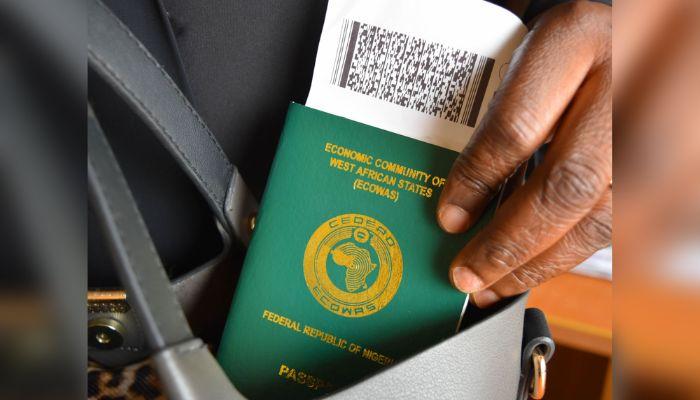
Photo: Vanguard
Fear No Stop Them: Nigerians Are Still Trooping to South Africa
You would think that after all the videos of Nigerians being chased through the streets of Johannesburg, after all the WhatsApp forwards of burnt shops and terrified traders, after all the breaking news alerts about xenophobic flare-ups in Cape Town and Durban — you would think Nigerians would say, "Abeg, leave that place." But no. Our people are doing the exact opposite.
South Africa's Consul-General in Nigeria, Prof. Bobby Moroe, recently dropped a bombshell that has set social media buzzing: visa applications from Nigerians to South Africa have nearly doubled in recent months. Yes, you heard that right. Not reduced. Not remained the same. Doubled. Despite the xenophobic attacks. Despite the warnings. Despite everything.
So what exactly is going on? Are Nigerians not watching the news? Are they fearless or just desperate? Or is there something deeper happening that we need to talk about honestly?
South Africa Still Has That Shine
Let's be real with ourselves. South Africa is not just any African country. For many Nigerians, it represents something — opportunity, a better quality of life, a functioning economy (at least compared to what we're dealing with at home right now). Johannesburg's skyline, Cape Town's beauty, the rand-to-naira calculation in their heads — all of these things are pulling people in ways that fear simply cannot push back.
South Africa has one of the continent's most developed economies. It has universities that Nigerians attend, businesses that Nigerian entrepreneurs have built, and communities — especially in areas like Joburg's Hillbrow and Yeoville — that are essentially little Nigerian towns. When you have family there, when you have business connections there, when you believe your chances of survival are better there than in Lagos or Abuja, the xenophobia news becomes background noise. Sad, dangerous background noise — but background noise nonetheless.
The Hard Truth About Nigeria's Economy Right Now
Make we not deceive ourselves. A huge part of why Nigerians are doubling down on South Africa applications has everything to do with what is happening inside Nigeria today. The naira has been battered beyond recognition. Fuel subsidy removal hit ordinary Nigerians like a thunderclap. Inflation is eating people's savings alive. Unemployment among young graduates is at heartbreaking levels. And for many Nigerians, the calculation is simple:
- Stay in Nigeria and struggle with N1,500 per litre fuel and food prices that change every market day
- Or take your chances somewhere — anywhere — that at least offers a fighting chance
When you put it that way, even the risk of xenophobic harassment starts to look like a manageable risk compared to the slow, grinding suffering of economic hardship at home. That is not a comfortable truth, but it is the truth.
So Are These Nigerians Desperate or Opportunistic?
Here is where the conversation gets interesting. Not everyone applying for a South Africa visa is running from poverty. A significant number of Nigerians heading to Mzansi — as they call South Africa — are business people, tech professionals, students, and tourists. South Africa has legitimate pull factors that have nothing to do with desperation:
- Business opportunities: South Africa's retail, tech, and entertainment sectors are robust, and Nigerian entrepreneurs have historically found footholds there
- Education: Universities like the University of Cape Town and Wits University attract Nigerian students who can afford international fees
- Lifestyle: For middle-class Nigerians, South Africa offers a quality of life — infrastructure, healthcare, tourism — that is genuinely attractive
- Trade connections: Many Nigerian traders have established supply chains that run through South Africa
So it is a mixed bag. Some are voting with their feet because home has become unbearable. Others are simply pursuing opportunities in a market they understand. Both groups, however, are making the same calculation — South Africa is worth the risk.
The Xenophobia Problem Hasn't Gone Away
Let us not let the excitement of these numbers make us forget the very real danger. Xenophobic attacks in South Africa are not a myth or exaggeration. Nigerians — alongside Zimbabweans, Mozambicans, Ethiopians, and other African nationals — have been targeted repeatedly over the years. Shops have been looted, people have been killed, and communities have been displaced.
The frustrating irony, as many Nigerians in South Africa will tell you, is that it is often ordinary Black South Africans — not the government, not white South Africans — who are carrying out these attacks. Fuelled by high unemployment and the narrative that foreigners are "stealing jobs," some South African communities have turned on their African neighbours in ways that are both heartbreaking and deeply contradictory for a country built on the anti-apartheid solidarity of the entire continent.
Prof. Moroe's acknowledgment of the visa surge is interesting because it comes without any serious reckoning with why Nigerians are still coming despite being treated badly on the streets. A diplomat celebrating tourism numbers without addressing protection for Nigerian nationals is only telling half the story.
What This Really Says About Us as Nigerians
There is something deeply Nigerian about this entire situation. Our people have this extraordinary ability to look danger in the face and say, "Okay, but what's the upside?" It is both our greatest strength and sometimes our greatest vulnerability. We go everywhere — from Saudi Arabia to Libya to South Africa — not because we are reckless, but because we are relentlessly hopeful and stubbornly determined.
But we also need to ask our government some hard questions. When Nigerians are doubling their applications to a country that has repeatedly humiliated and endangered them, what does that say about what we are offering at home? When the risk of xenophobic violence in Johannesburg is still preferable to the risk of economic stagnation in Lagos, something has gone seriously wrong with our national promise.
The real story behind these visa numbers is not about South Africa's appeal. It is about Nigeria's failure to make staying home the obvious choice. Until that changes, our people will keep voting with their feet — and packing their bags for Joburg.
Comments
Post a Comment