


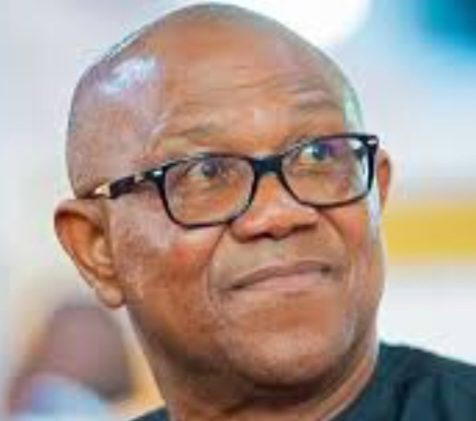
Photo: Vanguard
Obi Takes His Campaign to Onitsha — But Are His Questions Asking the Right Things?
Peter Obi don enter the ring early, and e don come with a different style this time around. Instead of straight-up promises that Nigerians don tire to hear, the Labour Party presidential hopeful touched down in Onitsha — the commercial heartbeat of Anambra State — and dropped five critical questions he says should define the 2027 general elections. Na bold move, no doubt. But here's the gbas-gbos nobody is having yet: do those questions actually mirror what the World Bank says is Nigeria's real development headache?
Because according to the World Bank's April 2026 Nigeria Development Update, the wahala is not just about identifying problems anymore. The report was sharp and direct: "Nigeria's challenge is how to turn economic reform and stabilisation into improved livelihoods." In other words, the macro numbers are beginning to look better on paper, but the ordinary Lagosian, the Kano trader, the Onitsha market woman — they're not feeling it in their pocket. So where does Obi's campaign messaging land when you put it under that lens?
The Five Questions Obi Is Asking
While the full verbatim of his five questions continues to circulate, the themes Obi raised in Onitsha centred around accountability in governance, security infrastructure, economic management, education quality, and the direction of Nigeria's democratic future. These are not new concerns — every Nigerian with sense has been asking them since 1999. But the timing and the framing matter, especially as 2027 campaigning officially kicks off with serious energy.
Now let's be real with ourselves for a second. Nigeria has been doing some economic reforms under President Bola Tinubu — fuel subsidy removal, forex unification, and attempts to stabilise the naira. The World Bank acknowledged these efforts. But the bank also warned, clearly, that reform alone doesn't feed families. The gap between macroeconomic policy and household welfare is where millions of Nigerians are currently drowning.
Where Obi's Questions Hit the Mark
Give the man his credit where it's due. Obi's insistence on accountability and economic management aligns directly with what the World Bank is pointing at. The report emphasised that revenue mobilisation, efficient public spending, and reducing fiscal deficits are critical to translating reform into real improvement. If Obi is asking Nigerians to interrogate how their money is being managed, that's not just political talk — that's exactly the conversation development economists are pushing.
His focus on education also resonates. The World Bank has consistently flagged Nigeria's human capital deficit as a drag on long-term growth. A country where over 20 million children are out of school cannot sustainably grow its economy no matter how many currency reforms you do. So when Obi raises education as a campaign pillar, the data is firmly on his side.
Where the Questions Fall Short — Or Need More Depth
Here's where we need to have a deeper conversation, sha. The World Bank's 2026 update specifically pointed to the need for social protection systems — direct, structured support for Nigeria's most vulnerable populations who are being battered by inflation and rising food prices. This is the kind of granular policy detail that Obi's broad questions don't yet fully capture.
For instance, Nigeria's food inflation has been punishing. The cost of garri, rice, tomatoes — basic survival items — has gone through the roof. The World Bank report called for targeted interventions. So the question isn't just "are we managing the economy well?" but specifically: how do we protect the 40% of Nigerians living below the poverty line while reforms take effect? That level of specificity is what separates a political campaign from an actual governance agenda.
Security is another area where Obi's questioning, while valid, needs to go beyond rhetoric. Farmer-herder clashes, banditry in the Northwest, and insecurity in the Southeast have direct economic consequences — they disrupt agricultural production, kill local commerce, and scare away investors. The World Bank data shows that states with higher insecurity consistently underperform economically. So the question on security should directly connect to livelihoods, not just law and order.
Why Onitsha Was the Right Place to Start
Make we talk about the venue too, because it matters. Onitsha is arguably Nigeria's most iconic trading city. It hosts one of the largest markets in West Africa. Starting his campaign there sends a clear signal — Obi wants to anchor his message in commerce, productivity, and the hustle of everyday Nigerians. For a man whose brand has always been about fiscal discipline and economic prudence, it's symbolically smart.
But Onitsha traders will tell you their problems in plain language: bad roads, multiple taxation, insecurity on major highways, and the collapse of purchasing power. These are hyper-specific, ground-level issues that any serious 2027 agenda must address with concrete answers, not just critical questions.
The Bigger Picture for 2027
As Nigerians begin to engage with 2027 campaigns — and yes, it's happening whether we like it or not — the World Bank framework gives us a useful measuring stick. Any candidate, whether it's Obi, Tinubu seeking re-election, Atiku trying again, or any new face — must answer this fundamental question: how do you convert economic stabilisation into food on the table, jobs for youth, and dignity for ordinary citizens?
Obi's five questions are a decent starting point for national conversation. They reflect genuine issues and they invite citizens to think critically rather than just vote on ethnic loyalty or stomach infrastructure. That's commendable. But questions alone don't win governance battles — detailed, credible answers do.
2027 is still loading, but one thing is clear: Nigerians are more sophisticated than politicians often give them credit for. The World Bank data is public. The hardship is real. And the voters in Onitsha market, Balogun in Lagos, Wuse in Abuja — they will be watching to see if the questions lead somewhere meaningful, or if na just another round of beautiful grammar before the next election disappointment.
The campaign don start. The scorecard don open. E remain to see who will bring real answers to real problems.

Comments
Post a Comment