


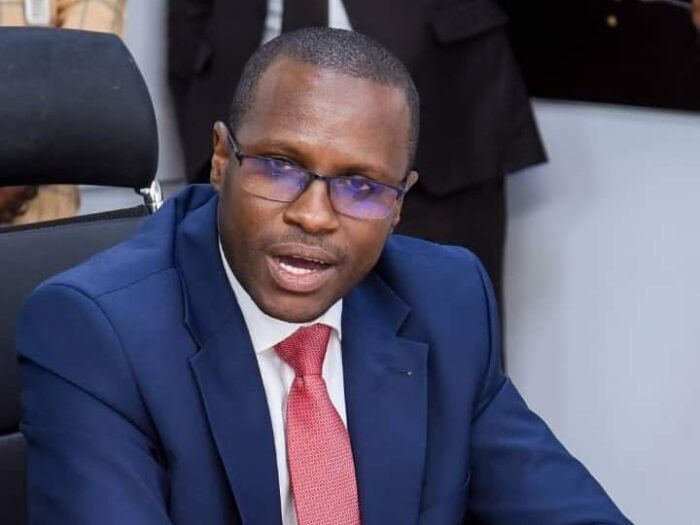
Photo: Vanguard
When Government Says 'We Saved Money,' What Does That Actually Mean?
So the Independent Corrupt Practices and Other Related Offences Commission (ICPC) has come out to tell us something that sounds very impressive on paper. Between 2023 and June 2026, they tracked a whopping 4,582 public projects worth over N22.53 trillion — and in the process, saved the Federal Government an estimated N385.62 billion. Chai! Those are big, big numbers, and your head might be spinning just reading them. But before we start clapping, let us slow down and ask the real question: what does any of this actually mean for Emeka in Onitsha, Fatima in Kaduna, or Bisi in Ibadan who is still struggling to put food on the table?
Let's Break Down N385.6 Billion, Abeg
N385.62 billion is not small money — let us be clear about that. But context is everything in this Nigeria of ours. To put it in perspective, that amount is enough to:
- Build over 3,800 fully equipped primary health centres across the country (at roughly N100 million each)
- Pay the N70,000 minimum wage for over 450,000 Nigerian workers for an entire year
- Construct hundreds of kilometres of standard federal roads
- Provide school feeding for millions of Nigerian children under the government's own homegrown school feeding programme
Now that we've laid it out like that, you can see that N385 billion is genuinely significant. It is not something to wave away. The ICPC, under its project tracking and monitoring mandate, essentially caught money that was about to disappear into the usual pockets — and pulled it back. That deserves some acknowledgement, at least.
But Wait — How Did We Even Get Here?
Here is where e get interesting. The ICPC tracked these 4,582 projects through something called constituency project monitoring and public institution monitoring. What this means in simple English is that government officials and contractors have been under closer watch than they are used to. You know how in this country, somebody gets awarded a road contract, takes the money, abandons the project after doing 30% of the work, and nobody follows up? That is exactly what ICPC has been trying to clamp down on.
The fact that they had to track N22.53 trillion worth of projects tells you something important — Nigeria is spending enormous amounts of money on public works. The problem has never been a shortage of budget or even, sometimes, a shortage of funds released. The problem is what happens to that money between when it leaves Abuja and when it is supposed to reach the bridge, the school, or the hospital. That gap — that dark, murky space — is where corruption thrives, and ICPC has been shining a torch in there.
Is N385 Billion Enough? Let's Have That Honest Conversation
Here is where we need to be real with ourselves, because as Nigerians, we have a habit of either over-celebrating small wins or dismissing genuine progress out of cynicism. Both extremes are dangerous.
Yes, N385.62 billion saved is a meaningful figure. But when you consider that the projects being tracked were worth N22.53 trillion, those savings represent less than 2% of the total value monitored. That tells us one of two things — either Nigerian contractors and government officials have become slightly better behaved under scrutiny (possible), or there is still a massive amount slipping through the cracks that ICPC simply does not have the capacity to catch (also very possible, and arguably more likely).
Nigeria's corruption problem is not a small thing you fix in three years. The Global Financial Integrity organisation has estimated that Nigeria loses billions of dollars annually to illicit financial flows. Transparency International's Corruption Perceptions Index still places Nigeria in uncomfortable territory year after year. So while we should commend ICPC for the work, we should not pretend that tracking projects and recovering N385 billion from a multi-trillion-naira budget machinery is the finish line. It is barely the first lap.
The Bigger Picture: Structure Versus Individual Effort
One thing this ICPC report quietly reveals is a structural problem in Nigeria's governance. Why do we need a separate commission to track whether contractors actually do the projects they were paid to do? Should that not be the job of the ministries, the supervising agencies, the local government authorities? The fact that ICPC has to step in and monitor what should be routine government oversight tells you that the normal system of accountability is broken at multiple levels.
For any of these savings to translate into real, tangible improvement in the average Nigerian's life — better roads, functional hospitals, schools with actual teachers and desks — the money recovered or saved needs to be redirected purposefully. Saving N385 billion means nothing if it just disappears back into a general fund with no clear accountability for how it is spent next.
What Should Ordinary Nigerians Do With This Information?
First, stay informed. Reports like this one from ICPC are public information, and citizens have every right to ask follow-up questions. Which specific projects were flagged? Which contractors were found wanting? What happened to them — were they blacklisted, prosecuted, or just quietly allowed to bid for new contracts next quarter?
Second, support and demand more from anti-corruption bodies. ICPC doing this work is good, but they need to be funded properly, protected from political interference, and empowered to prosecute — not just monitor. Many investigations in Nigeria end at the monitoring stage because by the time prosecution is supposed to happen, the political weather has changed.
Third, hold your local representatives accountable. A large chunk of those 4,582 projects are constituency projects — money allocated in your name, for your community. Ask questions. Visit project sites. Report abandoned projects through available channels.
Bottom Line
ICPC tracking N22.53 trillion worth of projects and pulling back N385.62 billion from the jaws of waste and corruption is genuinely commendable work. But in the grand scheme of Nigeria's corruption challenge, it is a down payment — not the full price. The average Nigerian deserves to feel these savings in their daily life: in better infrastructure, improved public services, and a government that truly delivers. Until then, we will keep asking questions, because that is the only way this country moves forward. E go better — but only if we make it better.

Comments
Post a Comment