

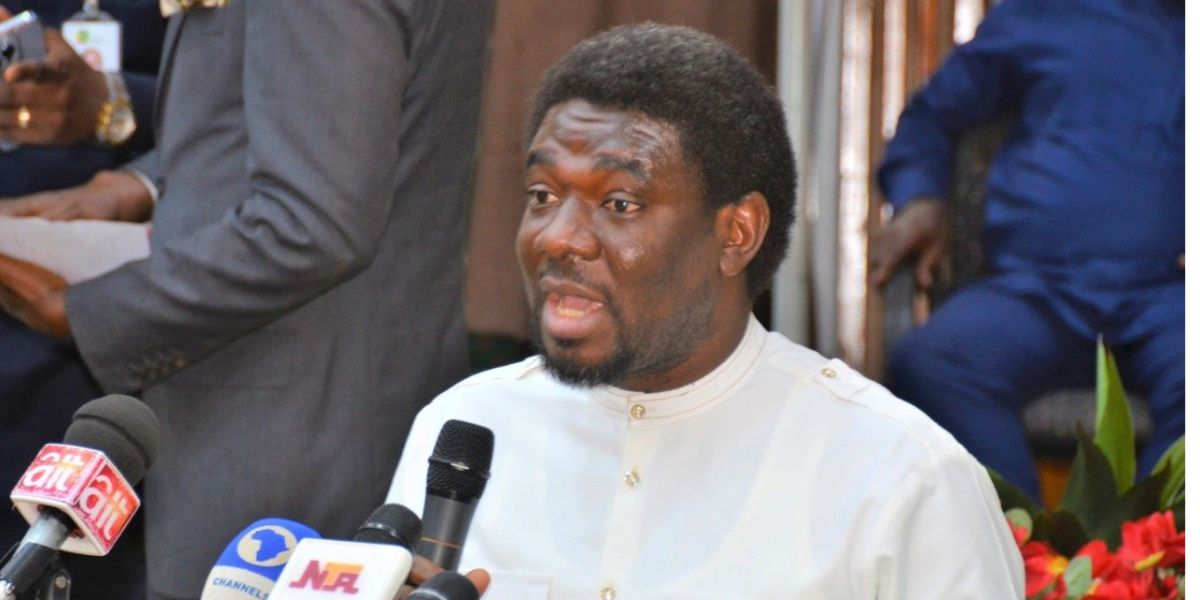
Photo: Vanguard
When Hunger Meets Hopelessness, Nigeria Pays the Price in Blood
Let's be honest with ourselves for once. You cannot be chasing armed bandits in Zamfara with military helicopters while the same poverty that recruited those bandits is still very much alive and recruiting new ones in Katsina, Borno, and even inside Lagos. That is the hard, uncomfortable truth that PENGASSAN — the Petroleum and Natural Gas Senior Staff Association of Nigeria — has placed squarely on the table, and somebody needs to listen.
The association, under its President, Festus Osifo, has been vocal about what many Nigerians already know in their bones but our government continues to treat like a footnote: you cannot bomb your way out of insecurity when poverty is doing the real recruitment. This is not just union talk, people. This is a wake-up call that should be ringing in Aso Rock louder than the generators keeping the lights on there.
The Numbers Don't Lie — Even When Politicians Do
Here is where it gets real. Nigeria, according to the World Bank, has over 133 million people living in multidimensional poverty. One-hundred-and-thirty-three million! That is more than the entire population of most African countries. When you have that many Nigerians waking up every morning with no job, no food, and no hope, do not be surprised when some of them pick up AK-47s, join cults, or become willing tools for terrorists who at least offer them a sense of belonging and — God help us — a paycheck.
Since fuel subsidy removal in 2023, the cost of living has gone from difficult to suffocating. A bag of rice that cost ₦30,000 eighteen months ago now sells for over ₦80,000 in many markets. Kerosene. Transport fares. School fees. Everything don go up, but salaries? They are still lying down. The average Nigerian worker is running faster just to stay in the same place, and many are already falling behind.
Security Spending vs. Poverty — Nigeria's Backwards Budget Logic
Here is the gist that should make every Nigerian sit up: Nigeria has spent billions of naira on defence and security over the past decade. Billions. Yet banditry has expanded, kidnapping has become almost routine, and farmers in the Middle Belt are still fleeing their lands because of herder-farmer clashes that the government has not decisively addressed.
Meanwhile, according to PENGASSAN's position, the root causes — unemployment, lack of basic infrastructure, absence of social safety nets — remain largely unaddressed. You cannot keep putting plaster on a bullet wound, abeg. The strategy of treating insecurity purely as a military problem while ignoring its socioeconomic foundations is like mopping the floor without turning off the tap.
Some of the connections between poverty and security breakdown that PENGASSAN's warning forces us to confront include:
- Youth unemployment as a recruitment pipeline: Nigeria's youth unemployment rate hovers around 33%, with some states recording even higher figures. Every idle, hungry young man is a potential recruit for Boko Haram, ISWAP, or local cult groups. Full stop.
- Rural neglect fueling farmer-herder violence: When communities have no access to courts, no functional local government, and no economic alternatives, they resort to self-help — and self-help in conflict zones means violence.
- Urban poverty driving street crime: Lagos, Abuja, Port Harcourt — our cities are not safe either. One-chance robberies, phone snatching, and violent crime have all increased because desperation has a way of overriding morality when a man cannot feed his children.
- Oil theft and community complicity: In the Niger Delta, communities that were promised development in exchange for their oil wealth have watched decades pass with nothing to show. Is it any wonder that pipeline vandalism and crude oil theft persist? Hunger makes people creative in the worst ways.
PENGASSAN Is Not Just Talking — They Have Skin in the Game
Now, some people might dismiss this as just another union making noise. But PENGASSAN is not your regular civil society group. These are the senior staff of Nigeria's most critical industry — the people who keep the oil and gas sector running. When they talk about how poverty threatens national stability, they are speaking from a sector that has watched communities turn hostile, pipelines get vandalized, and workers get kidnapped for ransom, all because surrounding communities feel robbed and abandoned.
Osifo's message, delivered at what was also an event honoring past leaders of the association — people who gave years of service to build Nigeria's industrial backbone — carries extra weight. There is something deeply symbolic about old veterans of Nigerian labor sitting in the same room where their successors are warning that the country they helped build is being dismantled by poverty and poor governance. Nigeria deserves better than that.
What Needs to Happen — And Fast
Nobody is saying security forces should pack up and go home. We need them. But fighting insecurity without fighting poverty is like sending soldiers to battle with one hand tied behind their backs. Here is what genuine transformation would look like:
- Meaningful social investment that actually reaches poor Nigerians — not the ghost beneficiaries that swallow cash transfers meant for the vulnerable.
- Job creation at scale, particularly in agriculture, manufacturing, and the digital economy where Nigeria actually has comparative advantages.
- Community development in conflict zones — roads, schools, healthcare, water — so young people have something to lose by joining criminal groups.
- Accountability for security spending so that the billions allocated to defence actually buy equipment, training, and results rather than disappearing into private pockets.
The Bottom Line — Nigeria Must Choose
PENGASSAN has spoken. Labor has spoken. The data has spoken. Now the question is whether the Tinubu administration — and indeed, state governors across the country — will listen or continue the familiar pattern of treating symptoms while the disease spreads.
Nigeria cannot afford to keep having this conversation in another five years with worse statistics. The time for half-measures and political press releases is over. A nation where millions go to bed hungry every night is a nation that will never truly know peace. And that, my fellow Nigerians, is not a warning — that is a prophecy already fulfilling itself on our streets every single day.
Wake up, Abuja. The people are tired.
Comments
Post a Comment