

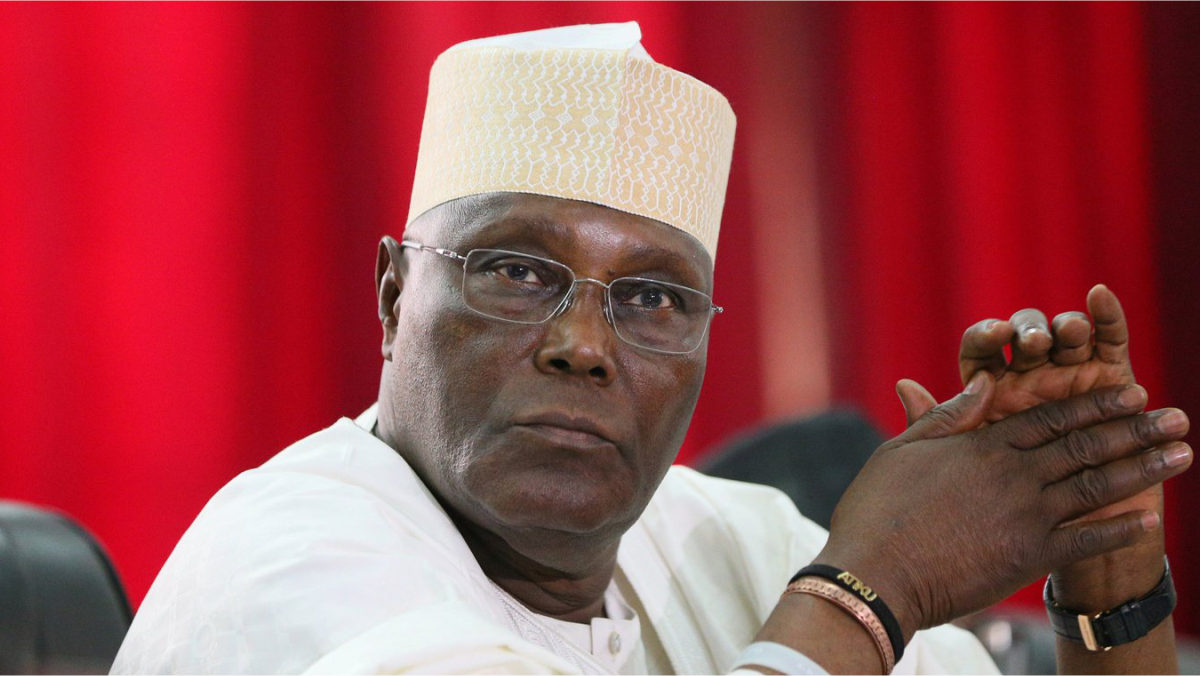
Photo: Vanguard
When the Numbers Stop Making Sense
Let's be honest with ourselves — when you hear "N12.62 trillion debt," your eyes probably glaze over. It sounds like one of those big, abstract government figures that has nothing to do with your garri and groundnut at home, right? Wrong. Dead wrong. Every single naira of that debt has your name written on it, and former Vice President Atiku Abubakar is raising serious alarm bells that every Nigerian needs to hear.
Atiku recently came out swinging, accusing the federal government of what many are calling outright fiscal recklessness — borrowing money that wasn't even approved in the national budget, with zero explanation of where the funds came from or where exactly they went. And e no be small matter at all.
Breaking Down the N12.62 Trillion in Plain English
Let's do some quick math that'll make your stomach turn. Nigeria has roughly 220 million people. When you divide N12.62 trillion by every man, woman, and child in this country, each Nigerian — including your newborn nephew and your 80-year-old grandma in the village — owes approximately N57,000 as their personal share of this national debt.
You think that's bad? Now add the fact that not all 220 million Nigerians are actively working or earning taxable income. If you narrow it down to the roughly 80 million people in Nigeria's formal and informal workforce who actually contribute to government revenue, each working Nigerian's share jumps to over N157,000. That's money that will eventually come out of public services, infrastructure spending, and yes — your taxes.
This is not abstract politics, my people. This is your pothole-riddled road that won't be fixed. This is the public hospital with no drugs. This is the school your child attends without chairs and textbooks. Every naira borrowed and mismanaged is a direct attack on the quality of your daily life.
The N3.19 Trillion Ghost That Nobody Can Explain
Now here's where things get truly alarming — and this is the part of Atiku's statement that should make every Nigerian sit up straight. Within that massive debt figure, there's a suspicious N3.19 trillion that was classified as "budget support" borrowing.
Here's the problem: there was no provision for any such "budget support" in the approved 2024 national budget. Let that sink in. The National Assembly sat down, debated, argued, and finally approved a budget. That budget did not include any line item called "budget support." Yet somehow, N3.19 trillion was borrowed under that name, with no clear disclosure of the source — meaning Nigerians don't know who lent us this money, under what terms, at what interest rate, or with what collateral.
Atiku described this as fiscal vandalism, and honestly? The cap fits. When a government borrows money outside the framework of an approved budget, it is essentially bypassing the legislature — the institution that represents you, the citizen. It's like your tenant taking out a loan using your property as collateral without telling you. Except in this case, you're the one who has to pay it back.
How This Affects Your Monday Morning
You might be wondering, "Okay, but how does this affect my Monday morning hustle?" Let me break it down:
- Exchange rate pressure: When Nigeria borrows heavily in foreign currency or from external sources, demand for dollars increases to service those debts. This puts pressure on the naira, which is why your dollar keeps buying more naira — and why that imported rice, phone, or generator part keeps getting more expensive.
- Inflation stays stubborn: The government often resorts to printing money or using Ways and Means financing (basically borrowing from the Central Bank) to manage cash flow on these debts. More naira chasing the same goods? That's inflation sitting heavy on your pocket.
- Less money for services: Nigeria currently spends a frightening percentage of its revenue just servicing existing debts — not paying down the principal, just the interest. That means less money for roads, hospitals, electricity infrastructure, and education. The debt trap is real.
- Future tax burden: Every unauthorized borrowing today is a tax hike for tomorrow. Your children will inherit this bill whether they like it or not.
Is Atiku Just Playing Politics?
Fair question, because naija politics can be dirty like that. Yes, Atiku Abubakar is an opposition figure and a perennial presidential aspirant. Yes, he has political motivations. But the numbers he's citing are not invented — they come from government documents and financial disclosures that any Nigerian can demand access to under the Freedom of Information Act.
The real question isn't whether Atiku is playing politics. The real question is: why hasn't the government provided a clear, line-by-line explanation of where N3.19 trillion came from and where it went? Transparency is not a gift from governments — it is a right that belongs to citizens. When your money is being borrowed in your name, you deserve a full account.
What Needs to Happen Now
This is not the time for Nigerians to yawn and scroll past. Civil society organizations, the National Assembly, and journalists need to demand a full forensic account of every borrowing that fell outside the approved budget framework. The Debt Management Office (DMO) must publish clear, accessible reports. The finance ministry must appear before the legislature and explain this N3.19 trillion — its source, its terms, and its use.
More importantly, Nigerians need to hold their elected representatives accountable. Your senator, your House rep — they approved a budget. If the executive borrowed beyond that budget without authorization, that is a constitutional violation that should not be swept under the carpet simply because we're tired of bad news.
The Bottom Line
Nigeria's debt burden is not just a number on a government spreadsheet. It is the pothole you swerve around every morning. It is the generator fuel you budget for because NEPA has failed again. It is the school fees that keep rising while public schools collapse. When N3.19 trillion can vanish into a budget line that didn't exist, and nobody faces consequences, we are all poorer for it — literally and figuratively.
Atiku may have political motives for raising this alarm. But the alarm itself? E dey valid. And it's time more Nigerians started asking the hard questions about who is spending their future — and why nobody is giving straight answers.
Comments
Post a Comment